AI Agents, Clearly Explained (for Non-Technical People)
Most explanations of AI agents are too technical or too basic. This one is for people who use AI tools but have no technical background. Three levels — chatbots, workflows, agents — and the one sentence that tells an agent apart from everything else.
Watch on YouTubeAgents in 60 seconds
- Three levels, built on tools you already use: LLMs → AI workflows → AI agents.
- Level 1 (LLMs like ChatGPT/Gemini/Claude): input goes in, output comes out from training data. Two limits — no access to your private info, and they're passive (they wait for a prompt).
- Level 2 (AI workflows): a human wires a fixed path (check the calendar, call a weather API). RAG — looking things up before answering — is just a type of workflow. However many steps, if a human makes the decisions, it's still a workflow.
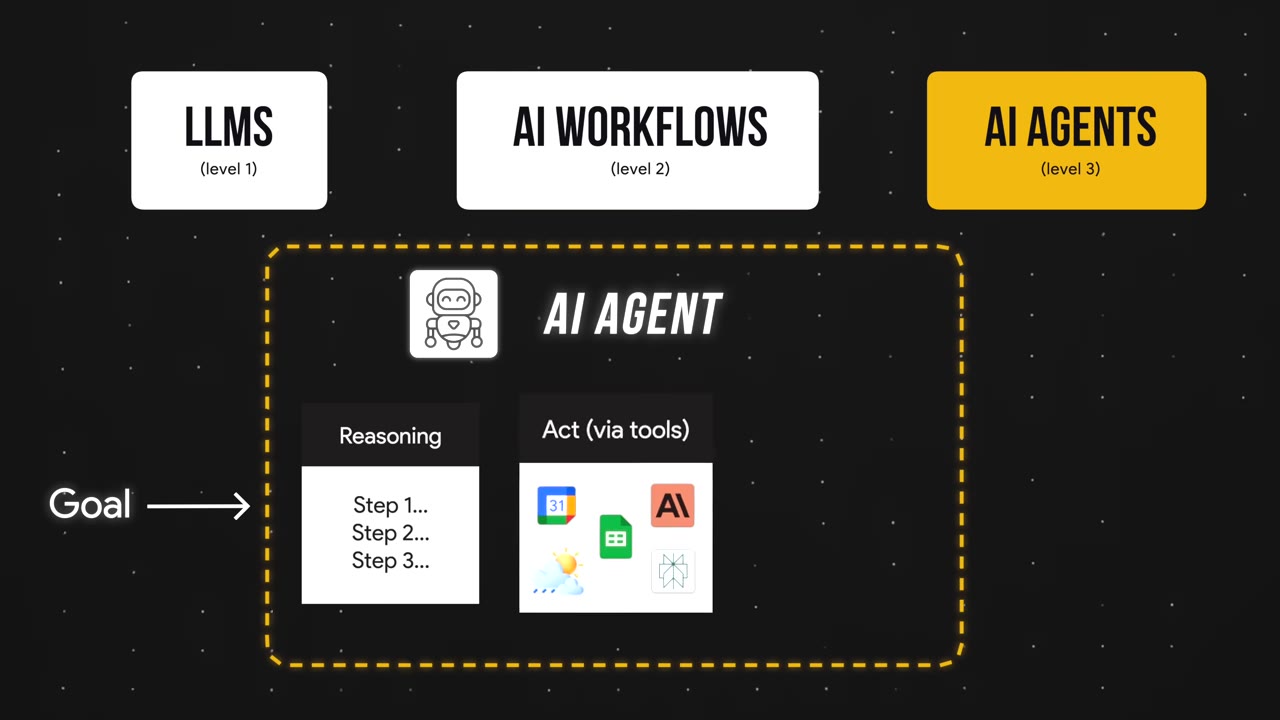
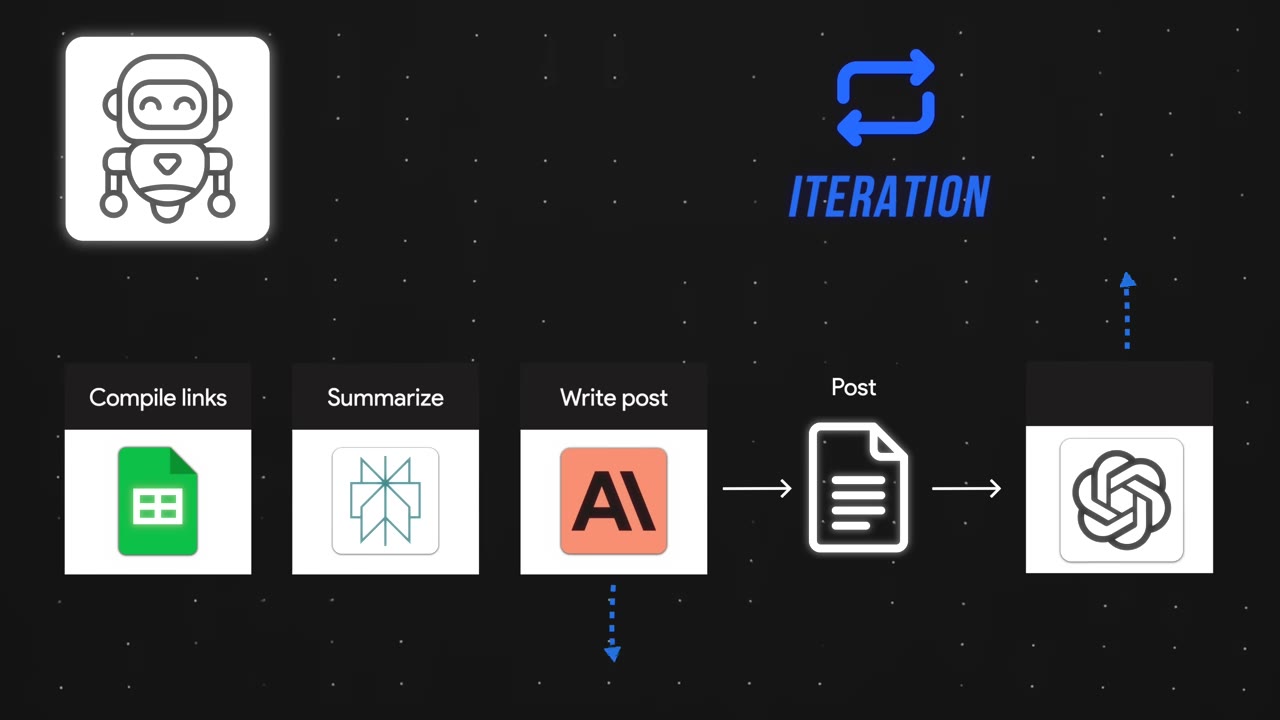
- Level 3 (AI agents): the one change is that the human decision-maker is replaced by an LLM that reasons and acts through tools (the ReAct framework), and iterates on its own — e.g. adding a second LLM to critique its own output until it's good.
- The test: give it a goal. If the LLM picks the steps and tools instead of you, it's an agent.
01 · The map
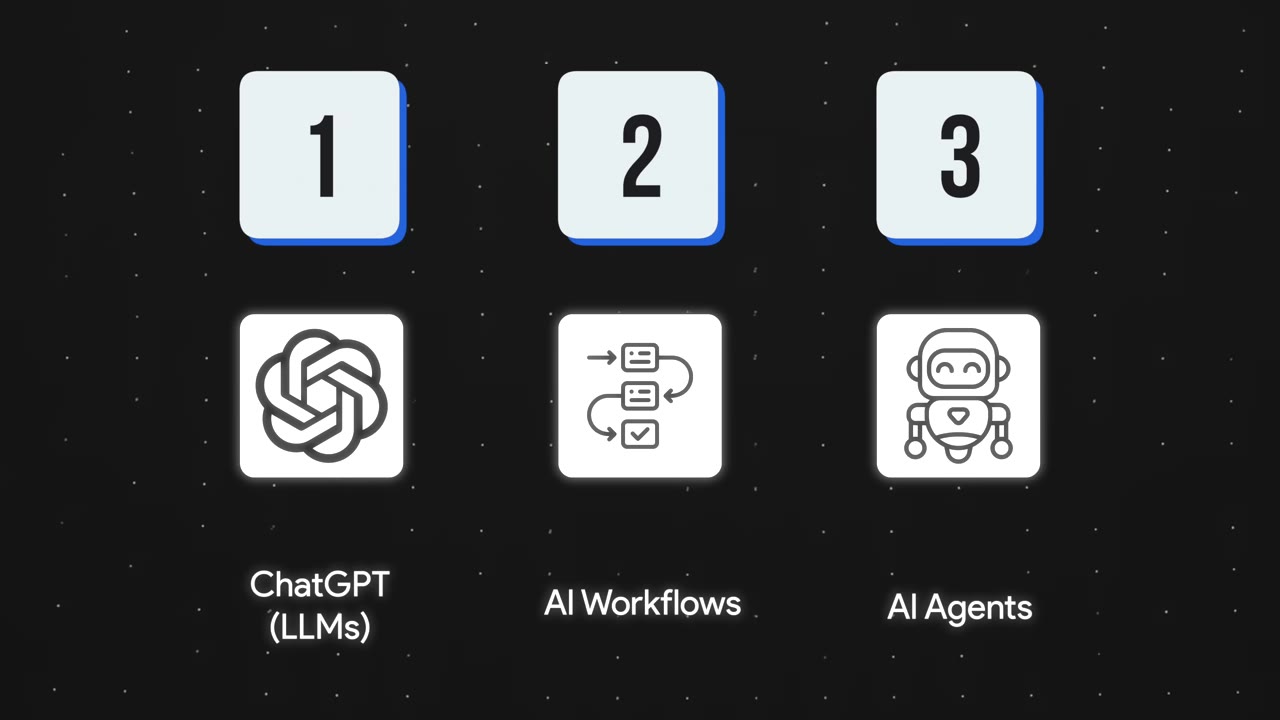
Three levels, one path
The video follows a 1-2-3 path, building on things you already use instead of throwing jargon at you.
02 · Level 1: LLMs
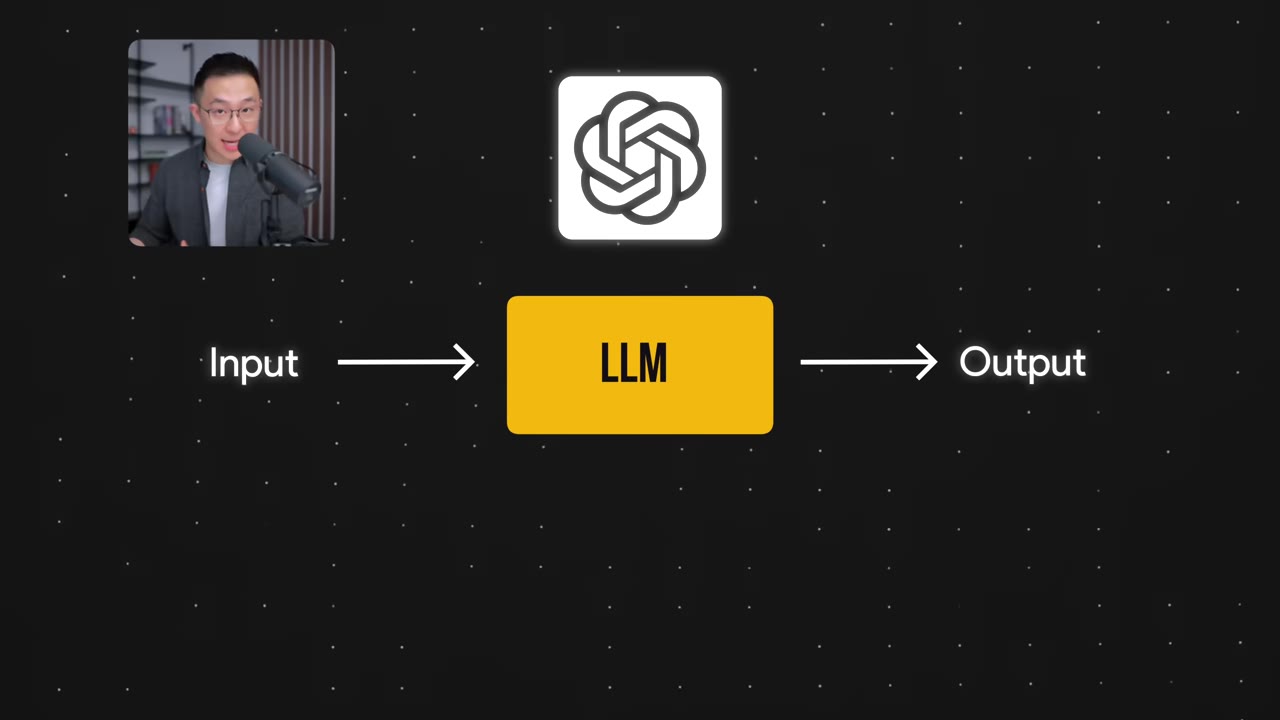
Input in, text out
Chatbots like ChatGPT, Gemini, and Claude are apps built on large language models. They're great at generating and editing text. You give an input, the model returns an output from its training data.
03 · Level 2: AI workflows
A human wires the path
Tell the LLM to always run certain steps first — "check my Google Calendar before answering" — and you've built a workflow. Add more steps: hit a weather API, speak the answer aloud. But it can only follow the path you defined ahead of time. That path is the control logic.
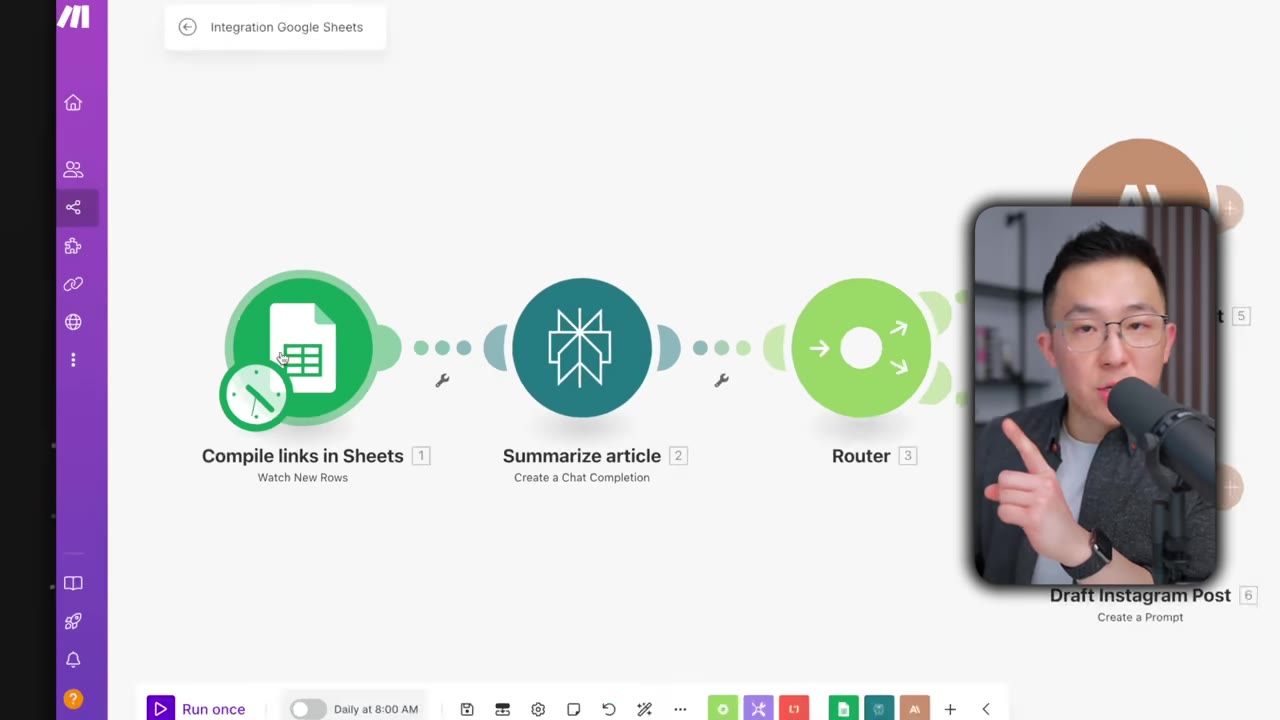
RAG is just a type of AI workflow… a process that helps AI look things up before they answer.— Jeff Su
The tell: no matter how many steps you add, if you're the one making the decisions — and you go back and rewrite the prompt by hand when the output is off — it's still a workflow.
04 · Level 3: AI agents
Reason + act = ReAct
This is the most important idea in the video. The workflow becomes an agent when the human decision-maker is replaced by an LLM. That LLM has to do two things: reason (think through the approach) and act (use tools).
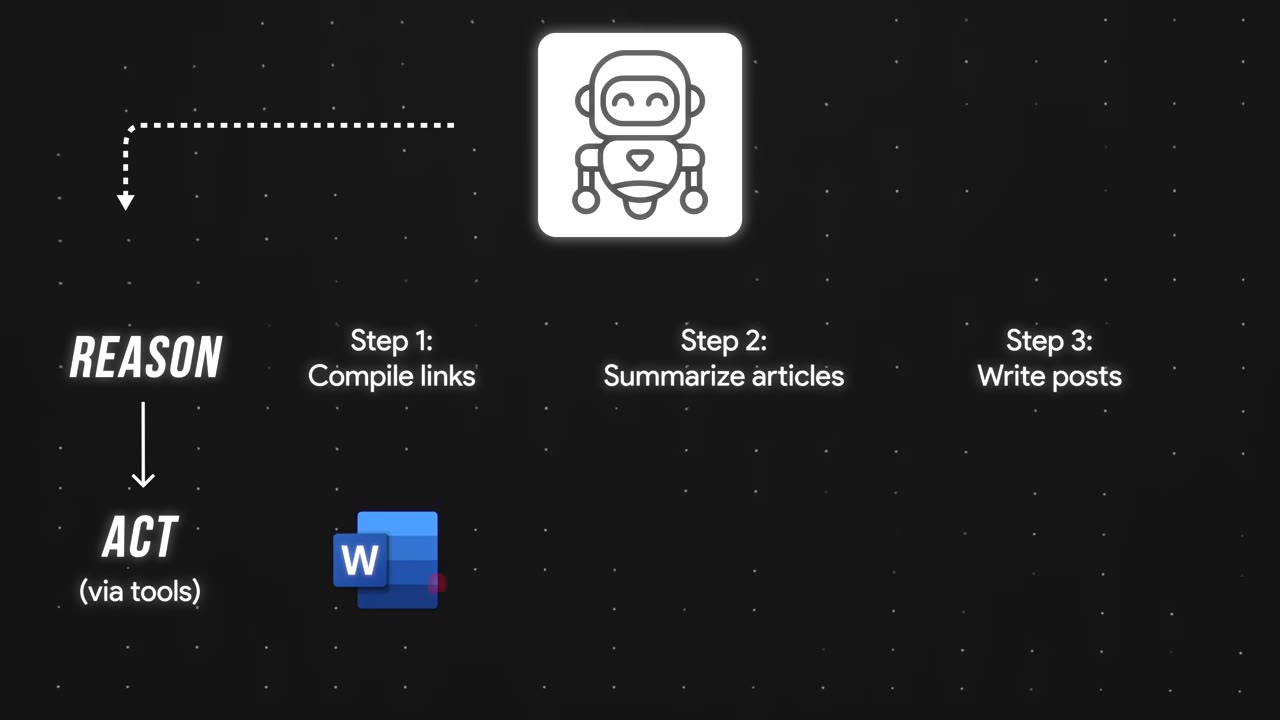
The one massive change for this AI workflow to become an AI agent is for me, the human decision maker, to be replaced by an LLM.— Jeff Su
05 · The third trait
Agents iterate on themselves
Remember rewriting the prompt by hand to make the post funnier? An agent runs that loop on its own — for example, adding a second LLM to critique its own draft against LinkedIn best practices, then revising until the criteria are met.
06 · The litmus test
Who's the decision-maker?
The recap. Level 1: input → output. Level 2: you program a path that may pull from external tools. Level 3: you give a goal — and the LLM reasons how best to achieve it, acts through tools to produce an interim result, observes that result, decides whether to iterate, and returns the final output.