AI and Our Economic Future: Why Growth Explodes — But Slowly
Stanford growth economist Chad Jones takes the two loudest stories about AI — Silicon Valley's "growth explodes" and the skeptics' "it's just another normal technology" — and runs both through real growth models. His organizing idea is weak links, and it points somewhere surprising: growth probably does explode, but far more slowly than the hype, while the downside risks arrive sooner.
Watch on YouTubeThe economist's take
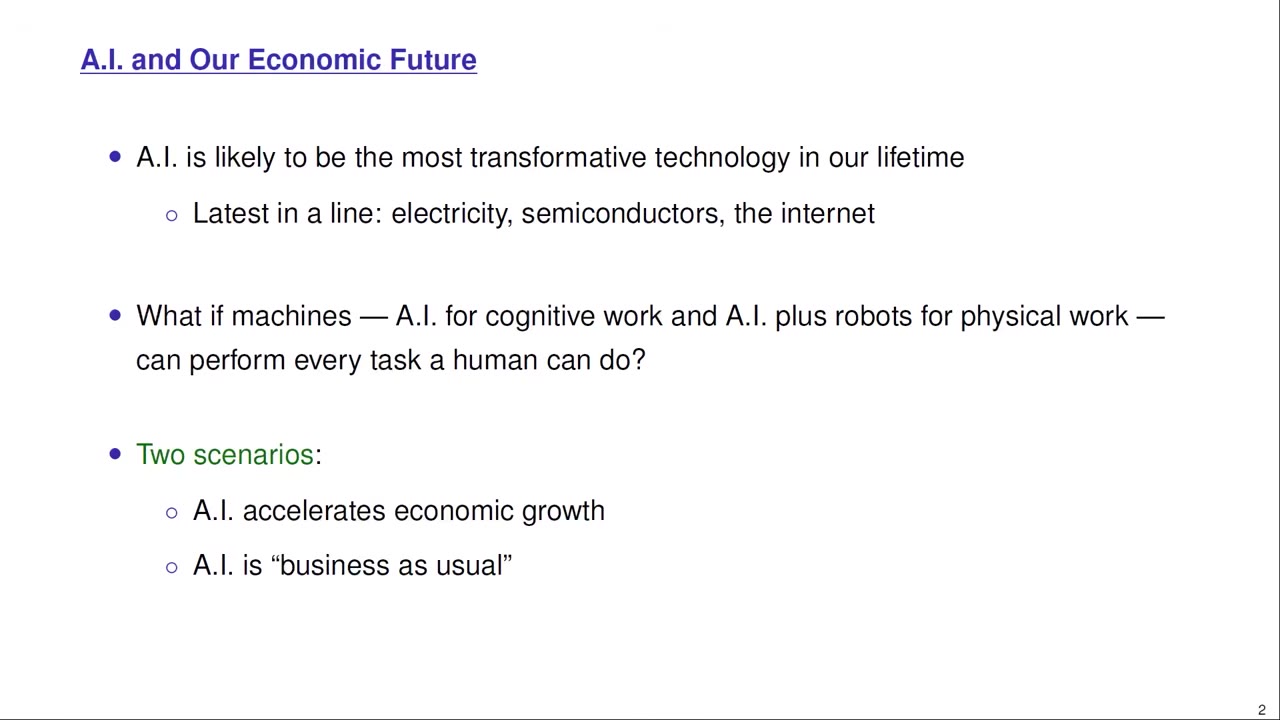
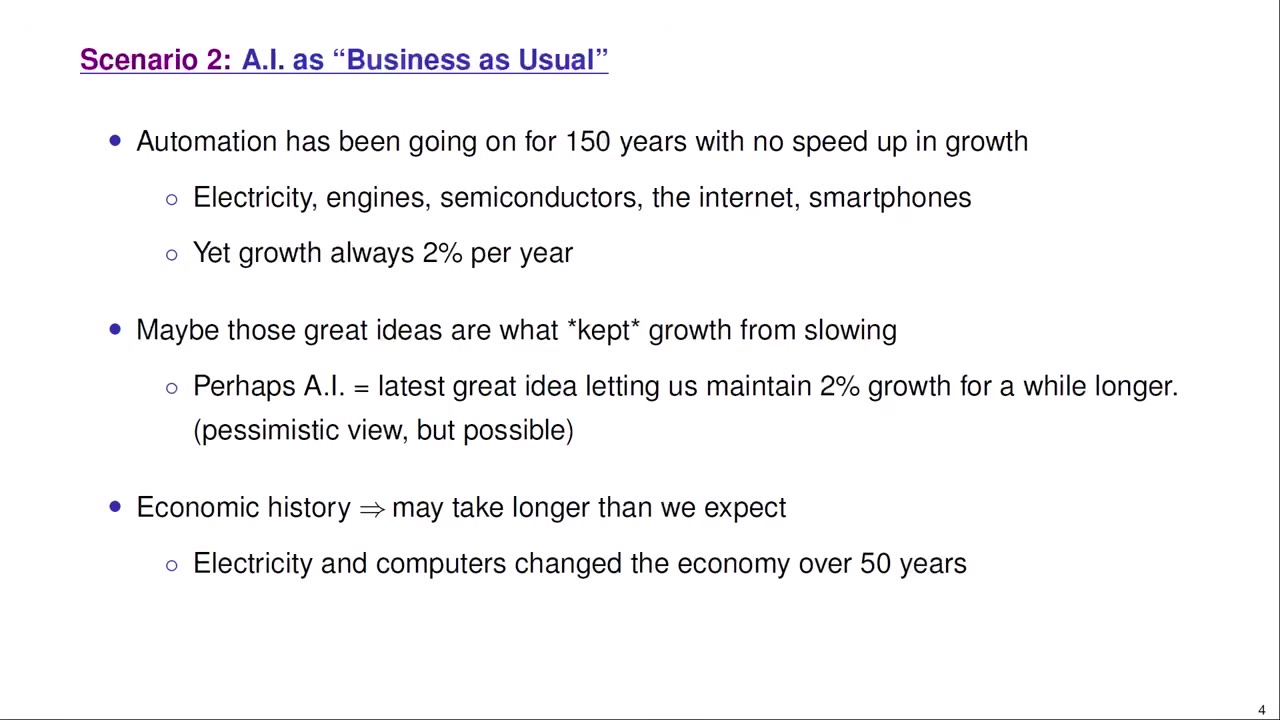
- Jones weighs two extremes: Silicon Valley's FOOM (AI automates everything and growth explodes) and business-as-usual (AI is just the next normal technology, like electricity, and 2% growth continues).
- His framework is weak links: a chain is only as strong as its weakest link, so automating most tasks barely helps — there's always a new bottleneck. You carry 100 million times the transistors of the 1970s, and you aren't 100 million times more productive.
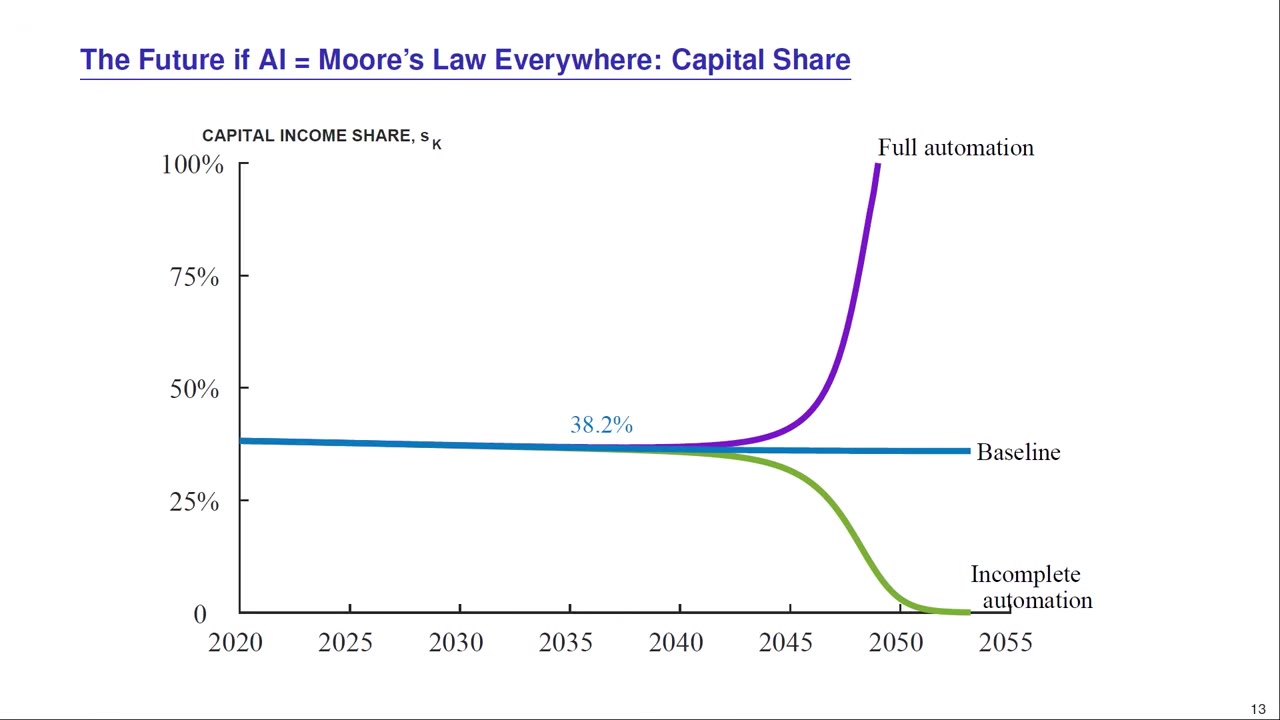
- His models say growth does eventually explode — but slowly. Even an aggressive 'Moore's Law everywhere' scenario takes about 30 years, not the 3–5 the AI-2027 crowd predicts.
- On jobs: roles are bundles of tasks, so automating 75% of them can raise wages — there are more radiologists now, paid more, after AI — though some jobs go and it all takes longer than the headlines say.
- He's genuinely worried about catastrophic risk: weak-link systems improve slowly but are fragile on the downside, and a bad actor with a jailbroken model hacking the grid or designing a pathogen is, he thinks, plausible within about 3 years.
01 · Two scenarios
FOOM vs. business as usual
Jones frames the debate as two caricatured extremes. Scenario 1, FOOM: AI automates software, then AI research, then becomes "a country of geniuses in a data center," then runs robots — and in the growth models he teaches, automating both cognitive and physical work makes growth explode. Scenario 2: AI is just the latest normal technology, like electricity or the internet.
02 · The 150-year puzzle
Transformative tech, yet always 2%
US living standards have grown about 2% a year for 150 years — nearly a straight line on a log scale — through electricity, cars, antibiotics, semiconductors, and the internet. How can technologies be this transformative and yet growth never accelerates?
03 · Weak links
A chain is only as strong as its weakest link
This is the heart of the talk. Running a business means completing many tasks; make 17 of 20 links in the chain superb and the chain is still only as strong as the weak ones. The Challenger exploded over a $25 O-ring.
Weak links are the source of scarcity… What is the scarce factor? What is the weak link? is a question we should always be asking.— Chad Jones
One telling data point: computers are everywhere, yet their share of GDP fell from about 4.5% in 2000 to 3% — they got so cheap and plentiful that humans, being scarce, capture more of the value. That's exactly what a weak-link model predicts.
04 · The model
Infinite software would make us… 2% richer
Jones builds a model where ideas drive growth (Romer), production has weak links, and automation chips away at those links over time. A clean thought experiment: if you had infinite software, how much richer would you be?
05 · What the simulations show
Growth explodes, but slowly
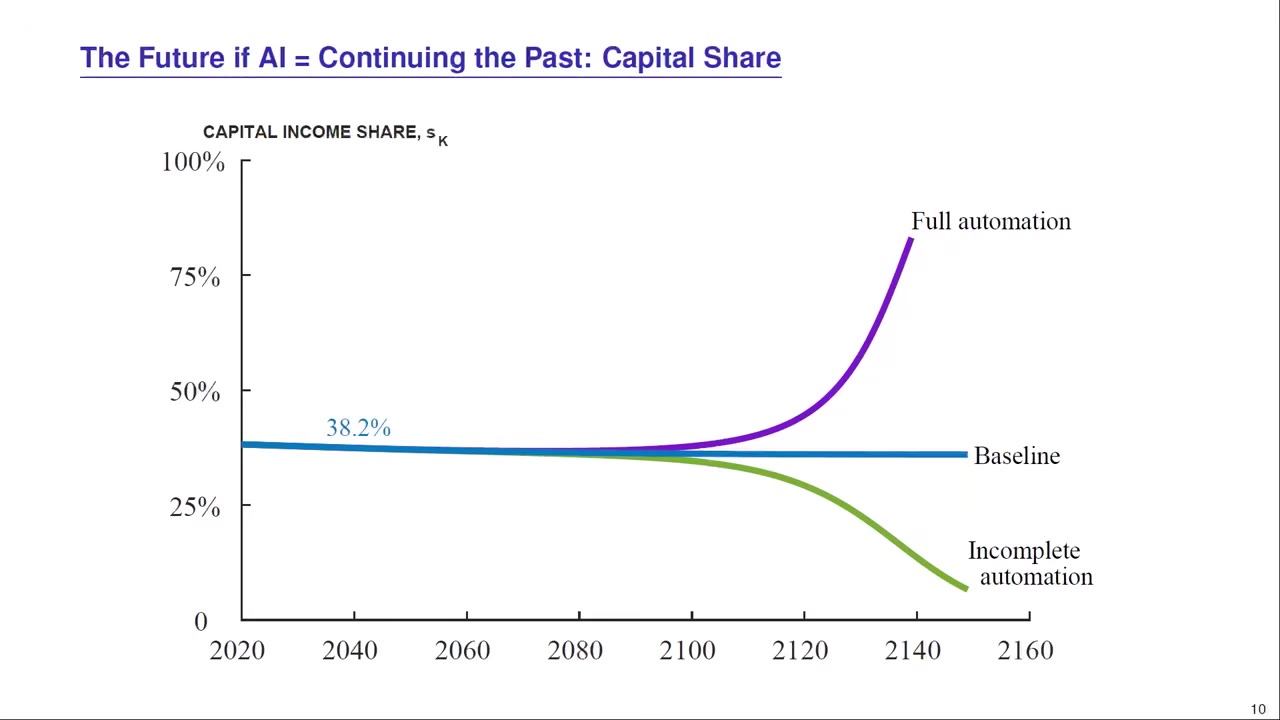
Run the model forward and growth does eventually take off, as the flywheel — automation makes ideas, ideas make more automation — wins out. But weak links hold it back for a long time first.
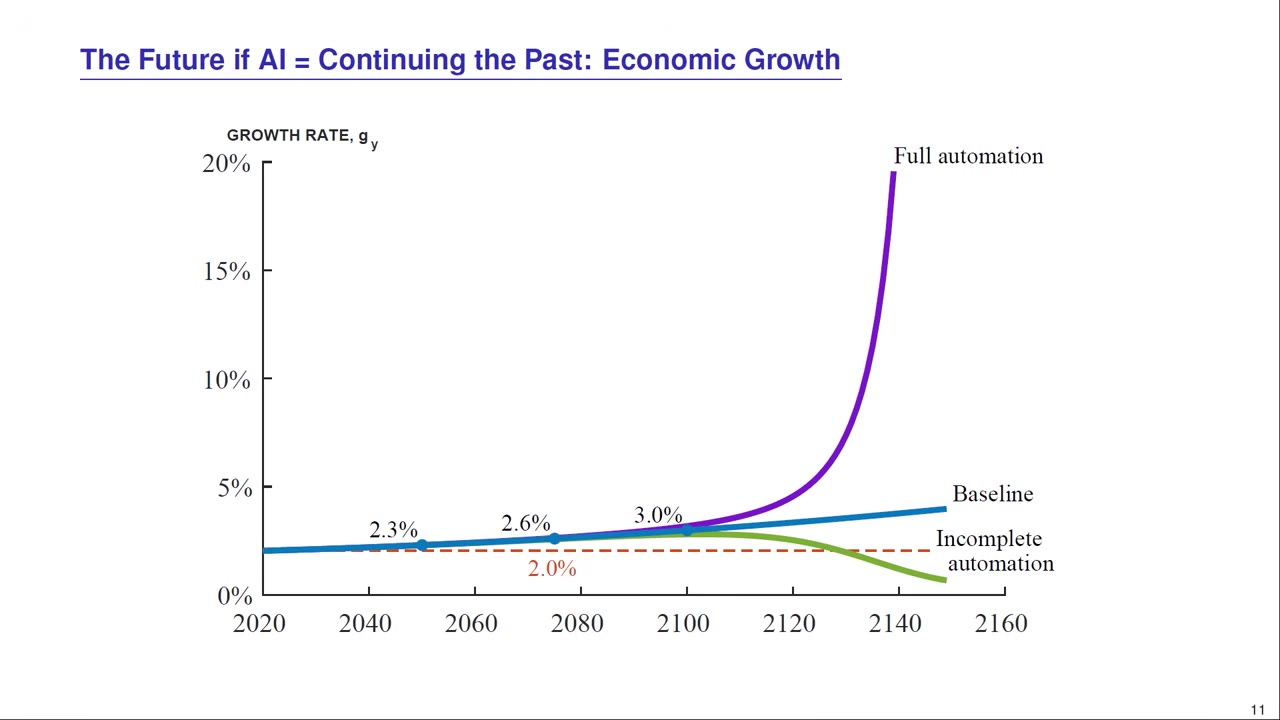
All the scenarios I run say growth explodes over the next 50 or 100 years… but the explosion is not nearly as fast as you would have thought when I said the word 'explosion.'— Chad Jones
06 · The aggressive case
Even "Moore's Law everywhere" takes 30 years
To steelman Silicon Valley, Jones runs a deliberately aggressive calibration: the entire economy starts improving 10% a year, like Moore's Law, starting today.
07 · Jobs
Automating 75% of your tasks can *raise* your wage
In 2016 Geoff Hinton said to stop training radiologists. Instead there are more radiologists today, paid more. Jones's lens: a job is a bundle of tasks; automate most of them and the tasks that remain become the scarce, high-return weak links.
08 · Inequality & meaning
Abundance, and what we'll do all day
A world where AI changes everything is a world of enormous GDP — abundance, with plenty to redistribute (keep today's US programs and the bottom 10%'s consumption rises). And because AI is hitting cognitive and creative work first, the electrician's wage may rise while the economist's doesn't — which could narrow inequality in the short term.
09 · The downside risk
Slow to improve, fragile to break
Jones isn't a pure optimist — he's "very nervous." Weak links cut both ways: the benefits come slowly, because you have to strengthen every link, but one broken link can destroy the value — and the catastrophic risks show up sooner than the upside.
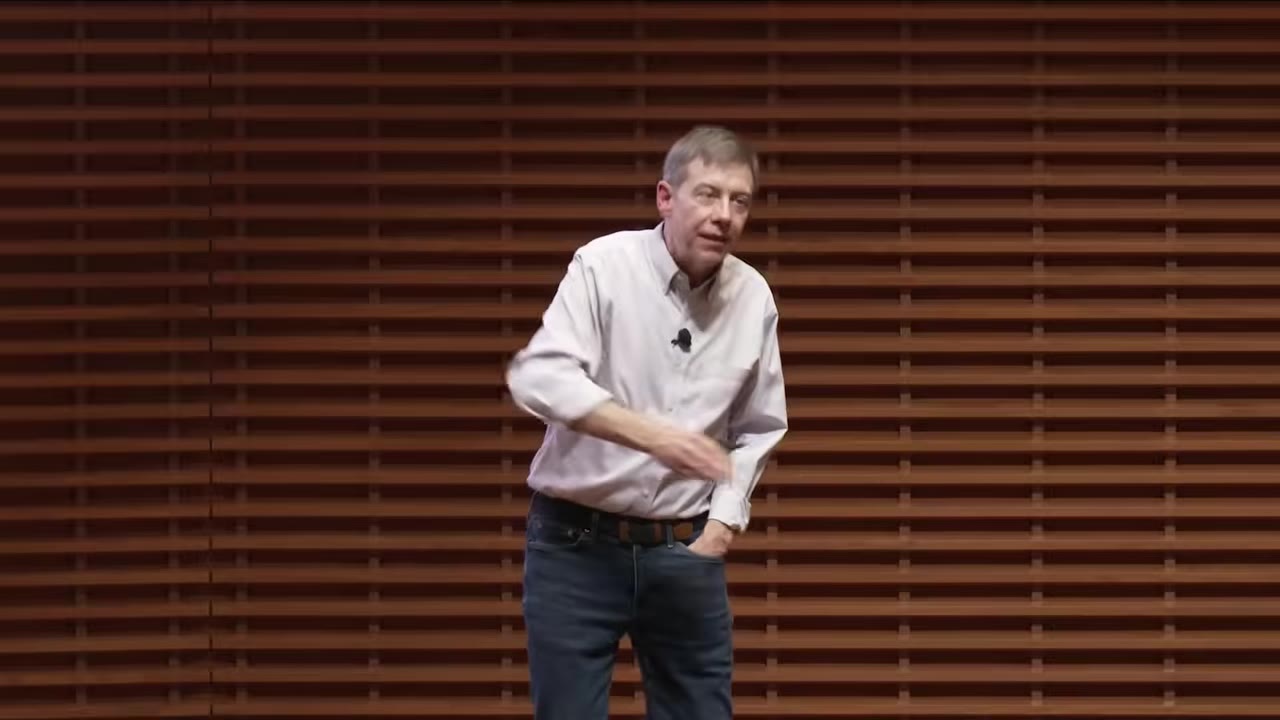
How do we retain power over entities more powerful than us forever?— Chad Jones (citing Stuart Russell)
His close: AI is worth "multiple internets," more transformative than anything we've seen — it will just take about 30 years, not five. Use the time to prepare for the labor, inequality, and catastrophic risks. And, only half-joking: "I'll be automated in two years. You guys are safe for another 15 — own shares of the S&P 500."