How Laser Cooling Works
Lasers burn, cut, and remove hair — so it sounds backwards that you can also point one at atoms and make them some of the coldest things in the universe. Diana and Derek walk through how cooling with light actually works.
Watch on YouTubeThe short version
- Light carries momentum, not just energy — so a photon hitting a moving atom head-on can slow it down.
- Tune the laser just below the atom's absorption color, and only atoms moving toward the beam get Doppler-shifted into resonance and absorb it. Stationary atoms are left alone.
- Surround the atoms with six beams (or three plus mirrors) and you slow them whichever way they move.
- You get down into the microkelvin range — a millionth of a degree above absolute zero — but never zero itself, because Heisenberg's uncertainty principle won't allow it.
- It's what makes atomic clocks accurate, and atomic clocks are how the GPS in your phone knows where you are.
01 · The counterintuitive idea
Cooling with light, not cold
Cooling something just means slowing its molecules down — the water molecules in a boiling pot move much faster than the ones in ice. So how do you slow atoms down by adding light? The answer is that light carries momentum even though photons have no mass. An atom that absorbs a photon coming straight at it takes on that momentum, and it gets nudged toward a stop.
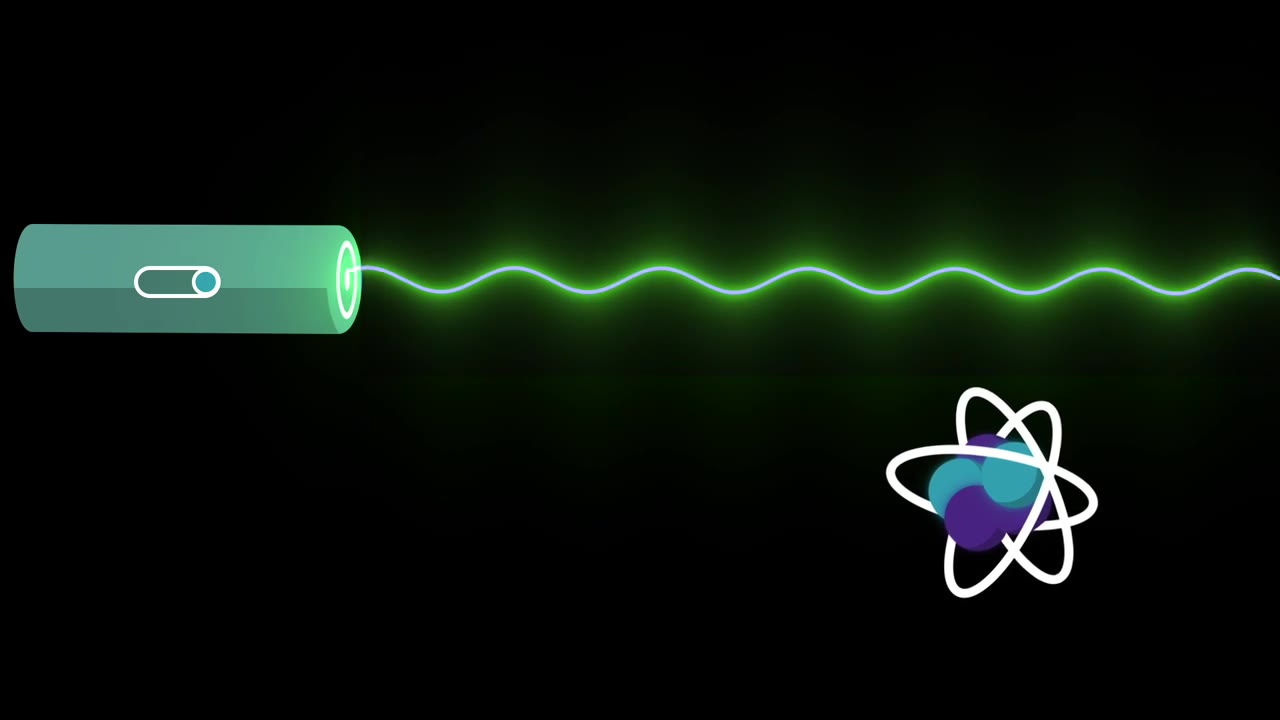
It's like trying to put out a candle with a flamethrower. It doesn't seem like that would happen.— Derek Muller
02 · Picking the wavelength
Atoms are picky about color
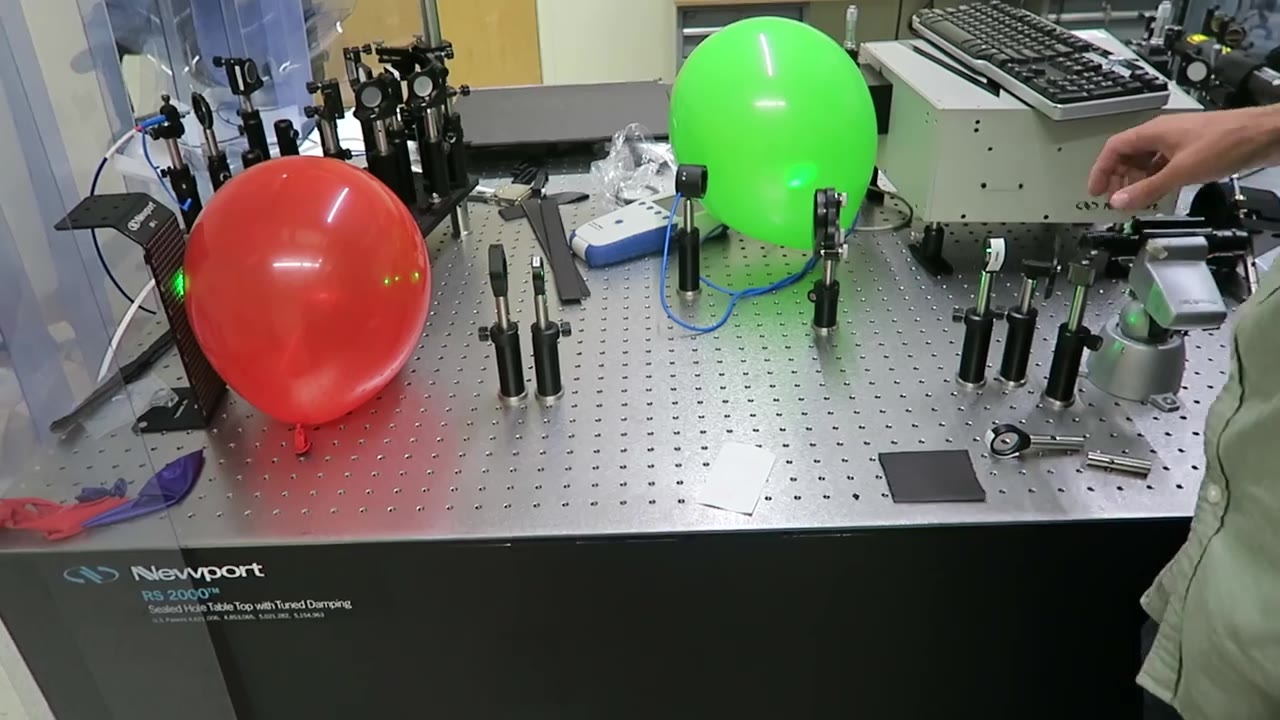
Atoms only absorb certain wavelengths — the same way a green balloon ignores a green laser but a red balloon absorbs it and pops. So you need exactly the right color, plus one trick: tune the laser a little redder than the atom's resonance. An atom moving toward the beam sees that light shifted bluer, into resonance, and absorbs it. Once it slows down, the light shifts back out of resonance and passes right through.
03 · Cooling in every direction
Six beams, all axes
One beam only slows atoms moving along its line. But atoms jostle around in every direction, so you surround the sample with light — a laser from each side: left, right, top, bottom, front, back. With six beams (or three bounced back by mirrors), an atom runs into photons pushing back no matter which way it drifts.
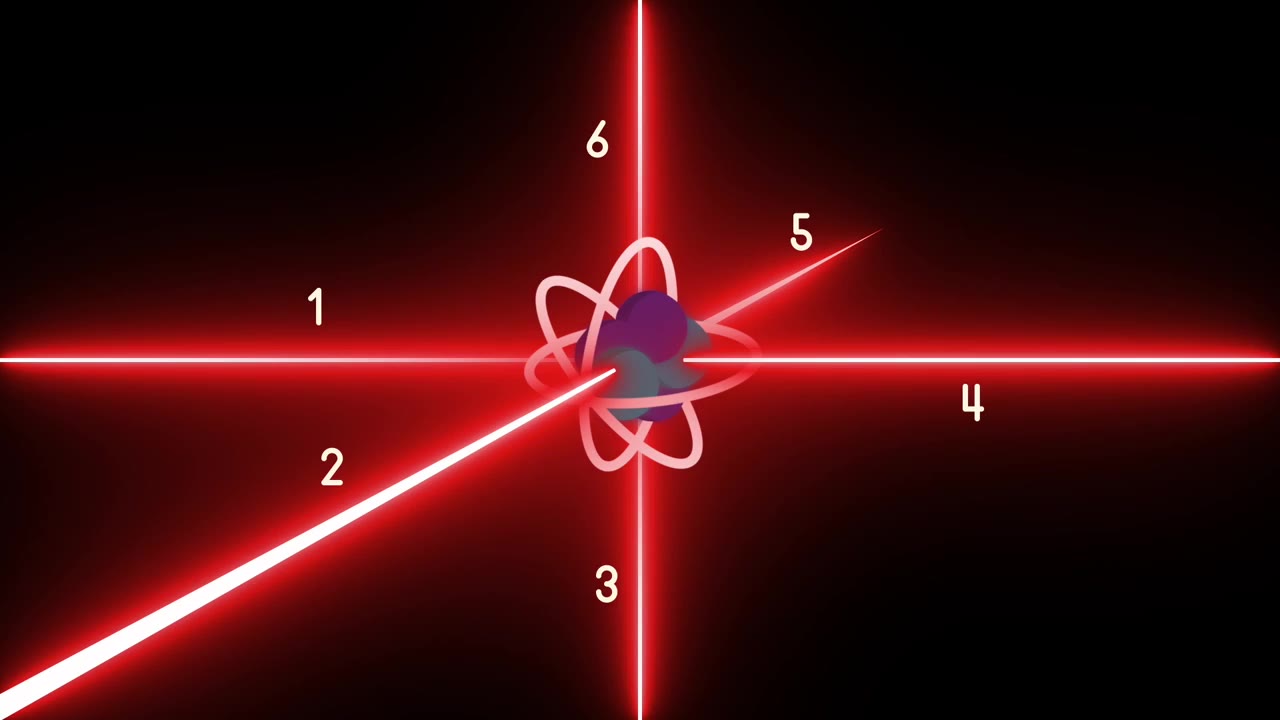
6 beams
One per direction
or 3 + mirrors
Reflect each beam back on itself
Net effect
Motion damped on every axis
04 · How cold, and why bother
Microkelvins and atomic clocks
This gets atoms to within a millionth of a degree of absolute zero — but never to zero. Heisenberg's uncertainty principle won't let you pin down an atom's position and momentum at once, so a little jitter always remains. Why go to the trouble? Atoms this cold show their quantum behavior, and they make atomic clocks accurate enough that satellite GPS works at all.
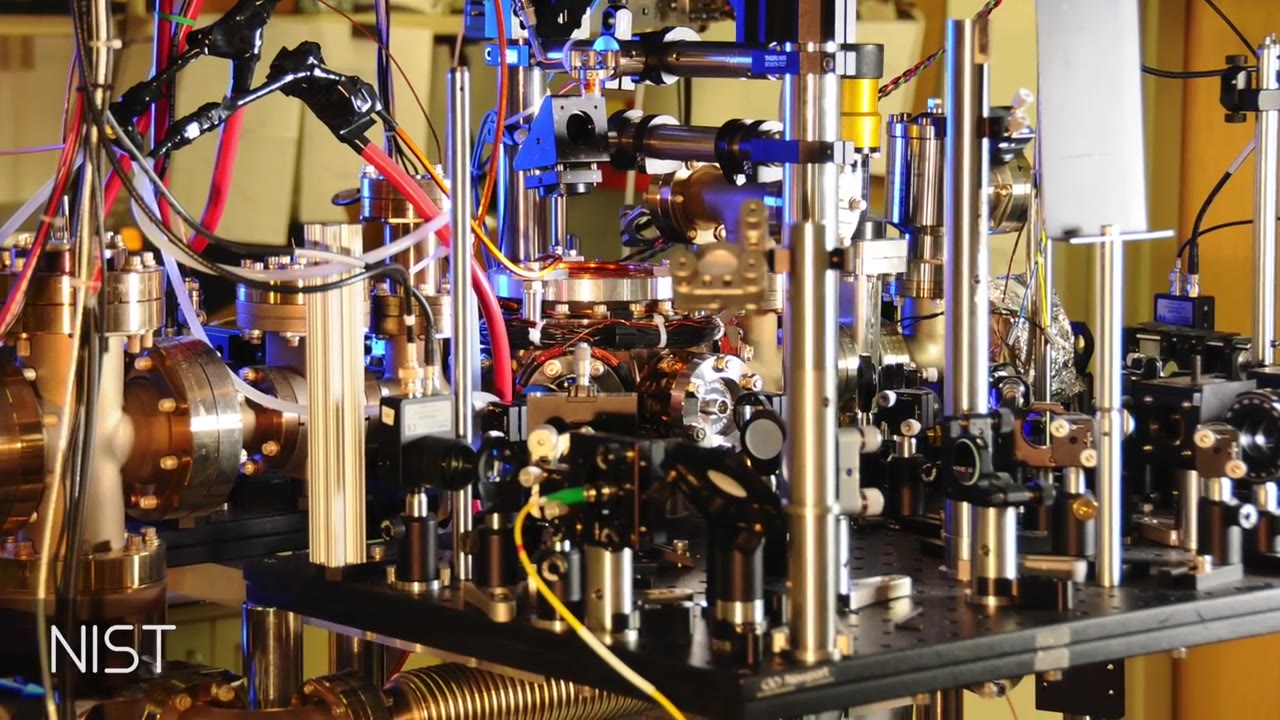
Our ability to locate ourselves from our smartphones is mainly based on this mechanism — laser cooling, working in satellites orbiting the Earth.— Diana Cowern