The JOOLA Pickleball Lawsuit, Decoded: What the Patents Actually Claim
The lawsuit is widely read as a fight over "Gen 3" paddles or banned shapes. The claims say otherwise. Working from the patent text and a set of paddles he's cut open, Johnkew traces the case to one construction detail present in every accused paddle — and notes the whole thing may come down to prior art.
Watch on YouTubeThe 60-second version
- The popular take — that the lawsuit is about 'Gen 3' paddles or 'diving board' shapes — misses the point. As a patent attorney told him: only the claims matter, and the claims describe a specific construction.
- JOOLA filed an ITC complaint (Section 337, aimed at blocking imports, not just damages) against 11 companies, on two patents: 826 (the key one) and 891.
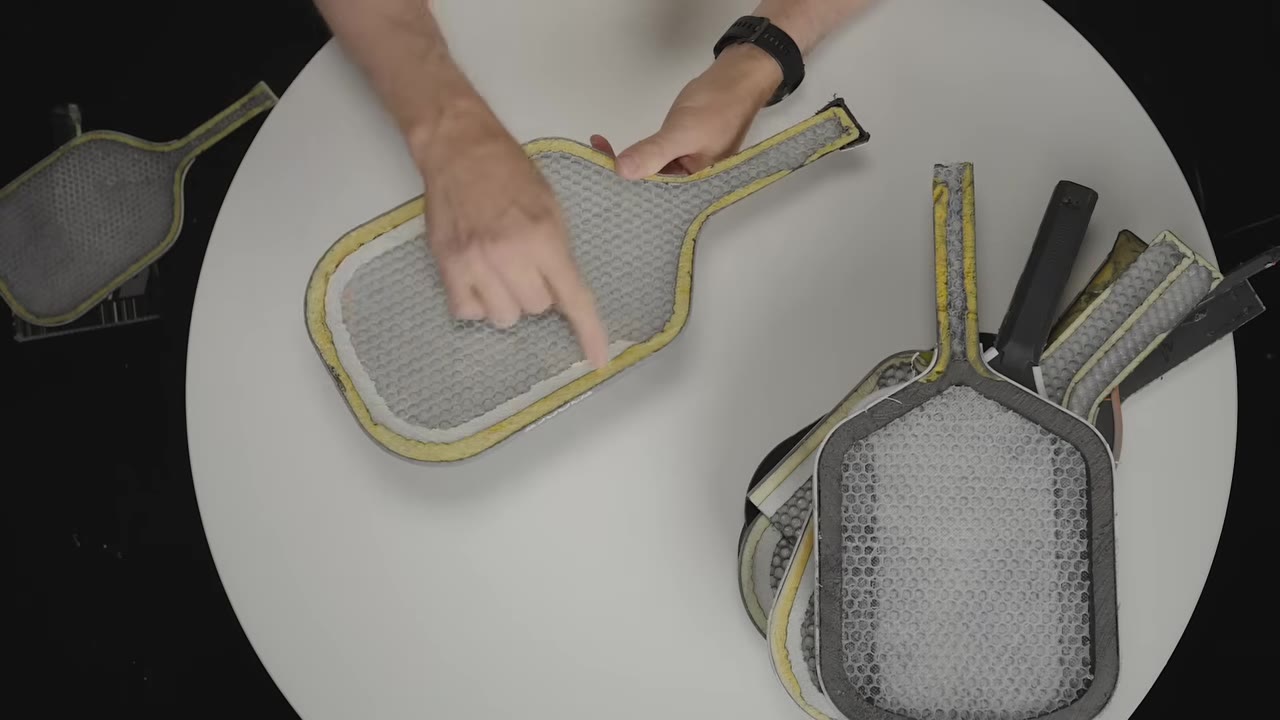
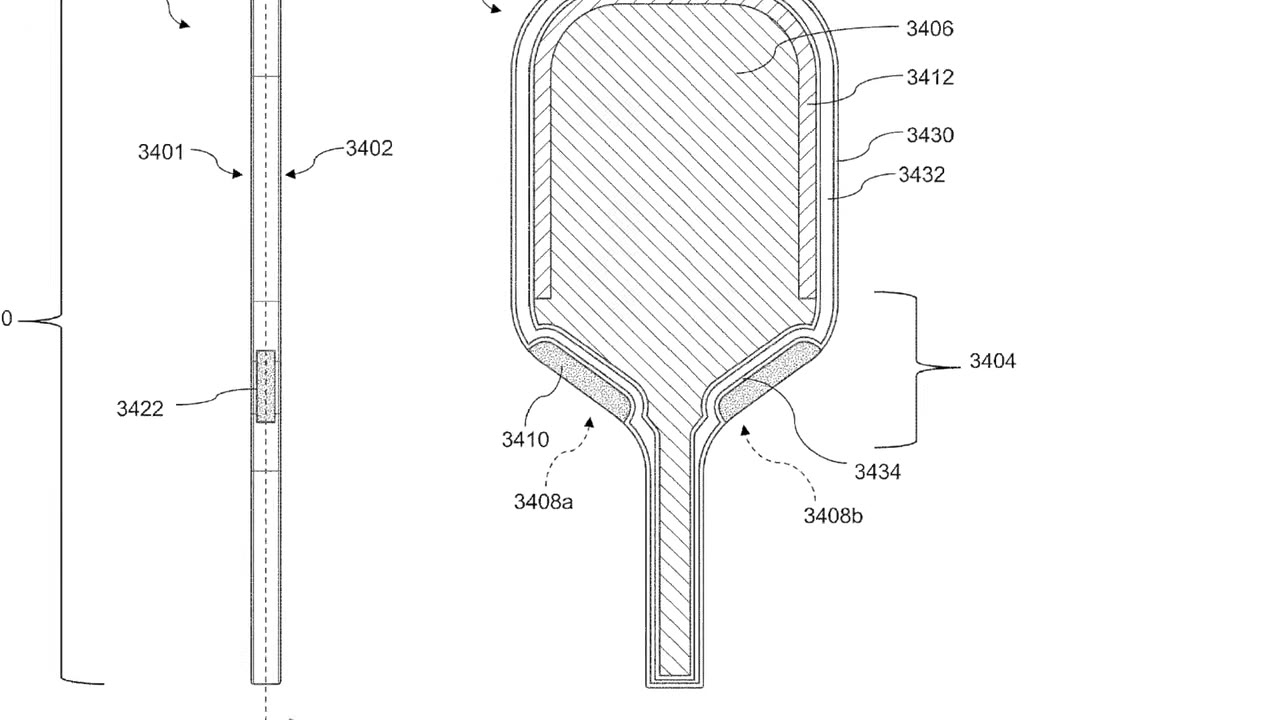
- Patent 826 requires a layered build: a core, then a gap with TWO fillers — an inner foam (e.g., an EVA 'horseshoe') and an outer hollow carbon-fiber 'frame'/'sushi roll' that can be filled with anything, even air. Every accused paddle shares it.
- What's NOT accused: paddles with a single filler running to the edge (no frame), like the Selkirk Era — and none of it hinges on whether the core 'floats.' Patent 891 is separate: internal core gaps, likely protecting the Pro 4 neck-foam inserts.
- The wildcard that could decide the case: prior art — if defendants show the construction was already known, used, published, or obvious, the patents can be invalidated.
01 · The lawsuit isn't what you think
Read the claims, not the headlines
He sets the caveat first: he's an engineer, not an attorney, and this isn't legal advice. The one piece of advice he got from a patent attorney organizes the whole video — only the claims matter. And the claims don't describe what most people think the suit is about.
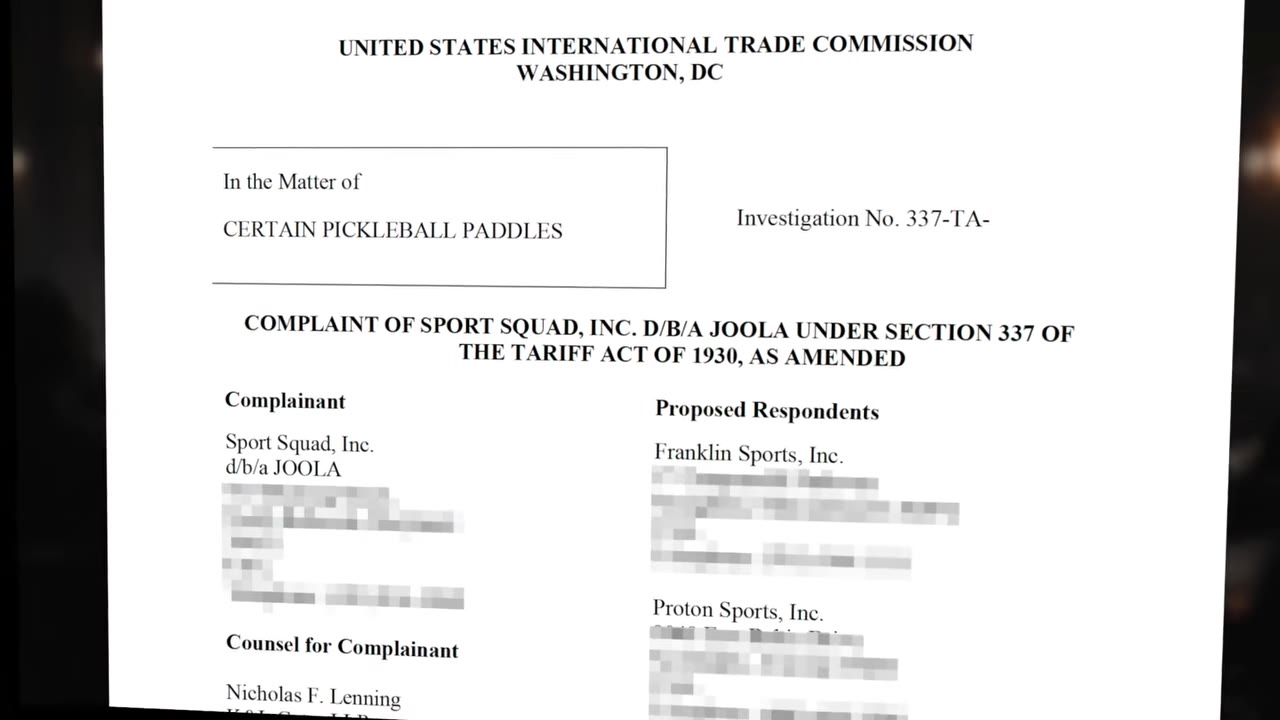
Everybody thinks this JOOLA lawsuit is about Gen 3 paddles, but the actual patents say something completely different.— Johnkew
02 · Show and tell
The paddle generations, sliced open
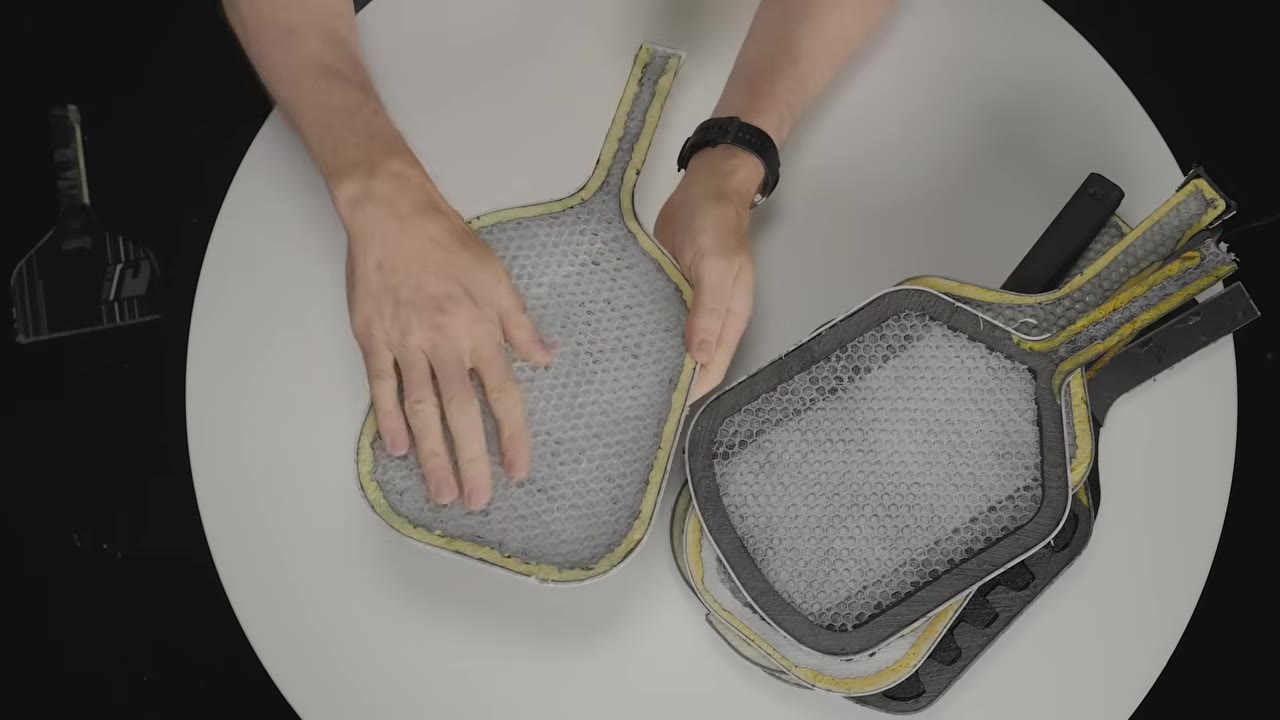
He's cut these paddles open for years, so he walks the actual cross-sections. Gen 1 (the original Franklin Ben Johns) is one slab of honeycomb polypropylene, edge to edge — no foam, no fillers. Gen 2 adds the "sushi roll" around the perimeter: a carbon-fiber tube filled with expanding edge foam, expanded in the oven so it fills the gap.
03 · Patent 826
The two-filler "sushi roll" structure
From the center out, 826 describes a core, then a gap filled with material, then an outer frame. What Gen 3 adds is a second filler in that gap — a white EVA-foam "horseshoe" between the core and the frame. The claimed structure is core → first filler → second filler (the hollow frame).
04 · What's in — and what's out
Single filler ≠ infringement
Every paddle in the complaint shares the two-filler pattern. Paddles with a single filler running to the edge — no frame — don't appear.
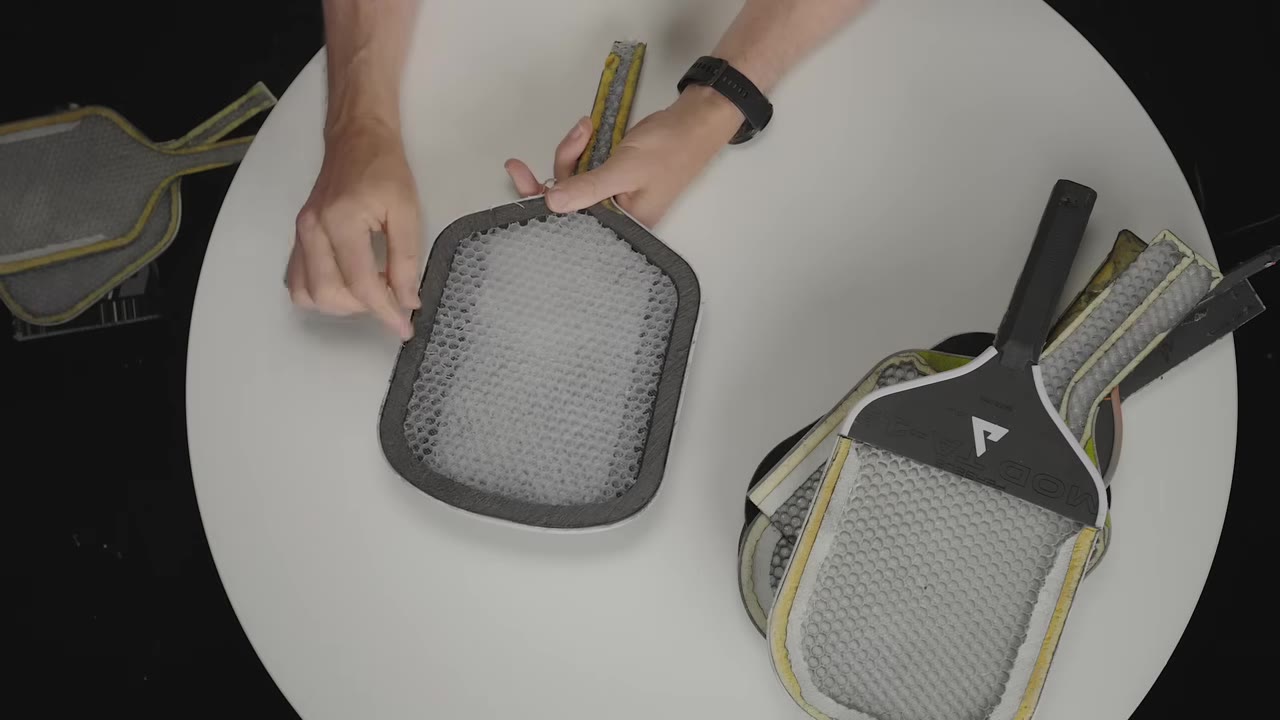
He's also explicit that none of this turns on whether the core is "fully floating," which he flags as a common misconception.
05 · Patent 891
The core gaps and the neck-foam inserts
891 is a separate claim, and he calls it the more confusing of the two. Instead of the core-to-edge layering, it's about modifying the inside of the core — cutting gaps and either filling them or leaving them empty. His read, which he hedges as a read: it's protecting the Pro 4's neck-foam inserts (later branded "TFP foam inserts"), and that depends on a specific ordering — the expanding edge foam tucking inside, between the core and the neck foam, rather than outside it.
06 · The wildcard
Prior art could undo it all
A patent that's valid on paper can still be invalidated. If the defendants show the construction was already known, used, published, or obvious from existing technology — prior art — the claims can be knocked out.

Even if JOOLA's patents are valid on paper, they can still be invalidated by the defendants if they can prove that the technology already existed.— Johnkew