A Full Dinking Lesson, Taught to a Spikeball Champ
Josh and Preston take a 4.5-ish player through soft-game fundamentals in one rapid-fire court session. The through-line is a single idea — "two and through" — and a string of feel cues to make it stick.
Watch on YouTubeThe lesson in five cues
- Every dink starts with the paddle below the ball, face open early — get under it before it bounces, then push through to a target. Don't scoop or lift late.
- Two and through: set the paddle (the two), then push straight to a target. No curving, no manipulating the face mid-swing.
- Condense to one athletic stance like a triangle. Reaching and lengthening your leg pulls your weight back off the ball; condensing keeps you engaged and on it.
- Collin Johns' rule of three — two dinks should sum to three. Answer an aggressive dink (a two) with a soft one; answer a soft dink (a one) with a two. Never trade two-for-two.
- On the half-volley there's no time, so go straight at it, head down, open face. When you do have time, then crank for spin.
01 · The setup
A 4.5 player, a fresh set of eyes
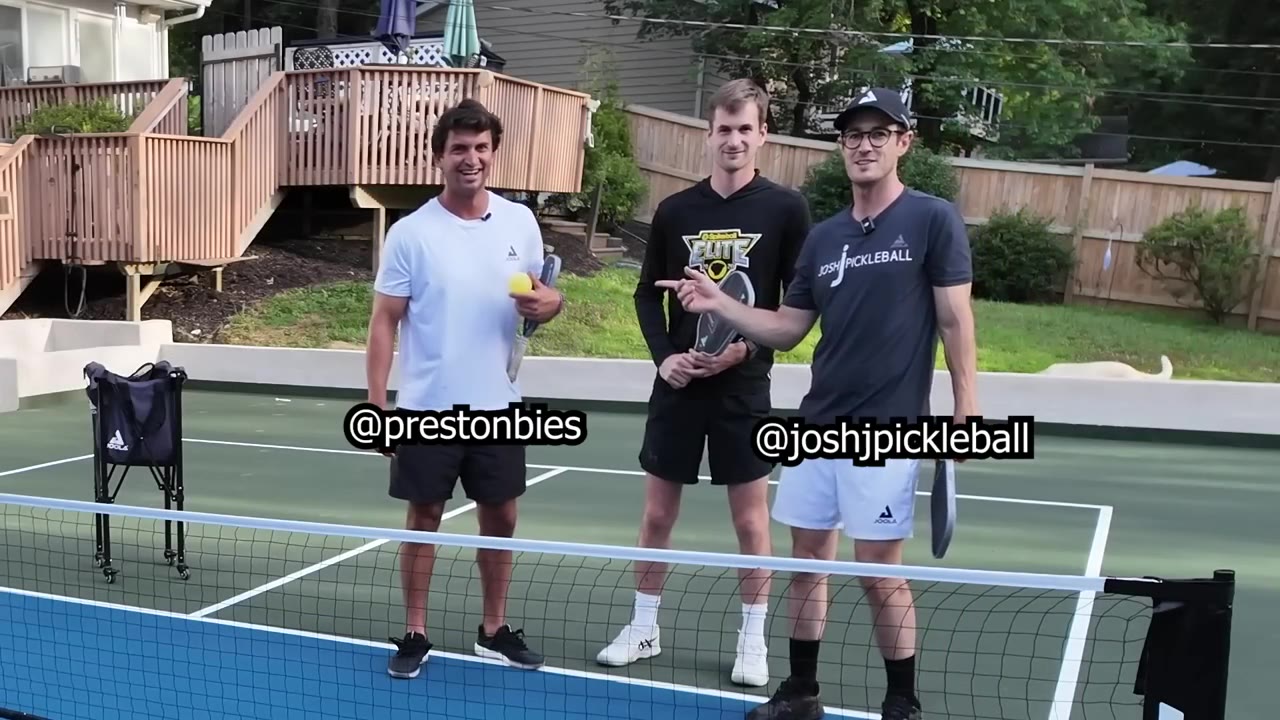
Josh and Preston pull in a player they've just met — Caleb, a former Spikeball standout and Josh's old doubles partner — and run a full soft-game lesson on him. He's been playing about a year and calls himself a 4 or 4.5. The plan is to dink with him, find the leaks, and fix them one cue at a time.
02 · Two and through
Set the paddle, push to a target
The spine of everything that follows. Get the paddle below the ball with the face open — that's the "two" — then push straight through to a target. No curving the ball, no opening the face through impact. Caleb's habit is to arrive late and try to open it on the way through; the fix is to be set and open first, then pull across.
- Get to itarrive early, paddle already below the ball.
- Set earlyopen face locked in, the "two."
- Through to targetpush to a spot, don't shape or curve it.
The whole two process is literally getting to it, setting early, through to target.— Josh
03 · Condense like a triangle
Reaching pulls you off the ball
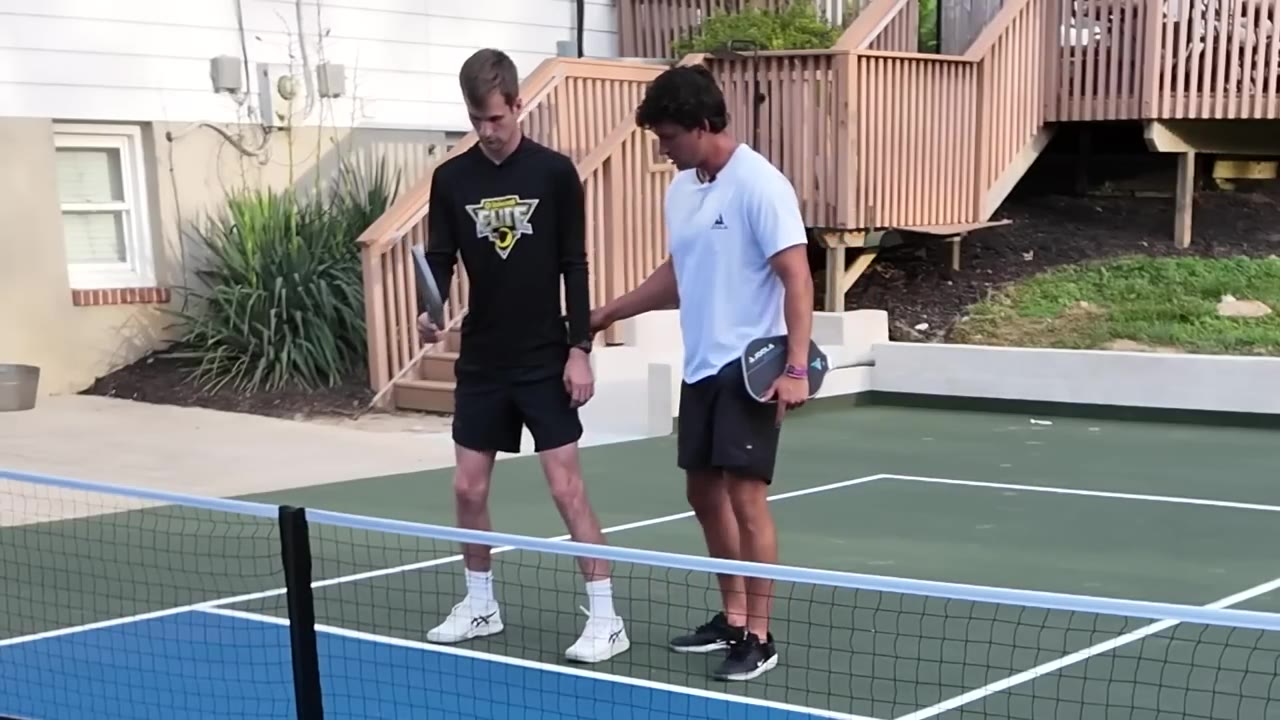
When Caleb gets pulled wide he goes "down and wide and cutting" — he lengthens his leg, his hip drops back, his weight falls backwards, and he's late. The cue is to condense everything toward one peak athletic stance, like a triangle, so both legs stay engaged and he can spill and adjust into the ball instead of away from it.
04 · Reset your feet
Hit the shot, then recover
A second, related leak: Caleb hits and stays a beat behind, weight still back, so a ball into his left foot jams him. The fix is to hit the shot, reset the feet, and be already loaded for the next one — not re-engaging from a dead stance every time.
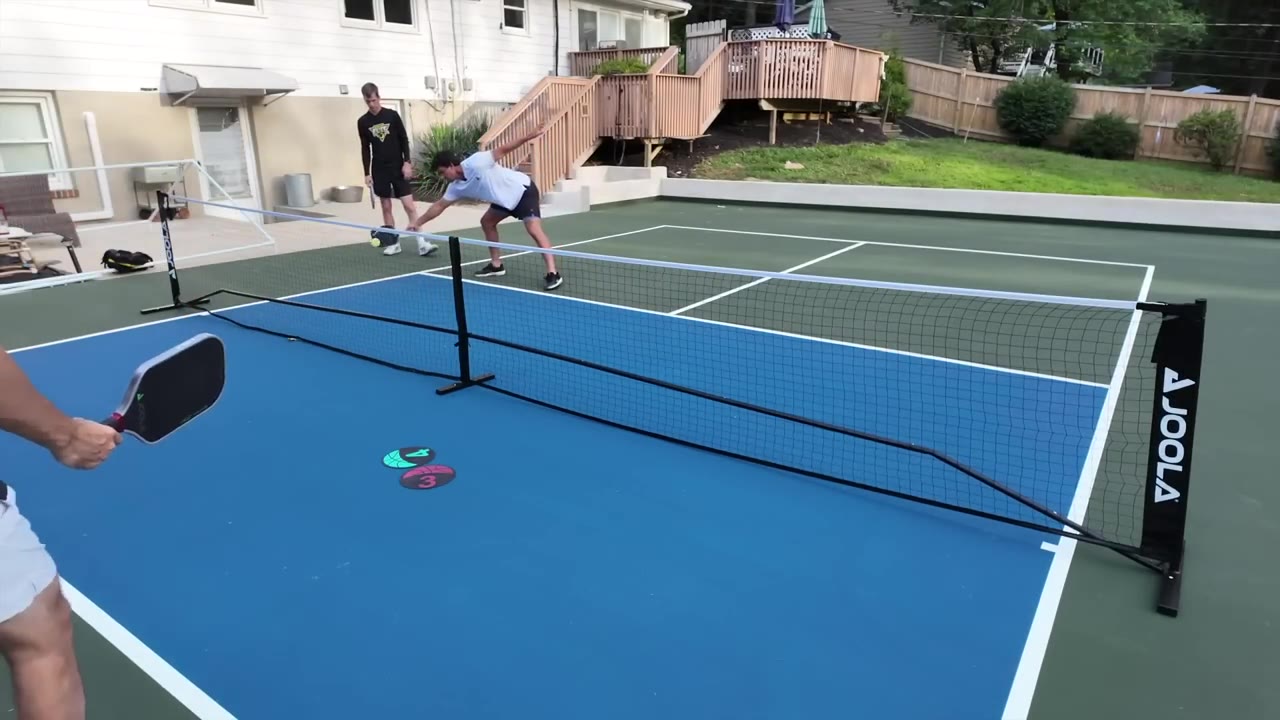
Go there, reset here, then I can move and take it. If your weight's still back, I have nothing to push off of.— Josh
05 · Set the face early
It's Spikeball, basically
Caleb's Spikeball background is the teaching shortcut here. In Spikeball there's no string to grip the ball, so the paddle face has to be in the right position before contact and held there. Same in pickleball: get the head below the ball early, point the face at your own face, and you don't need to add loft on the way through — you just maintain the angle.
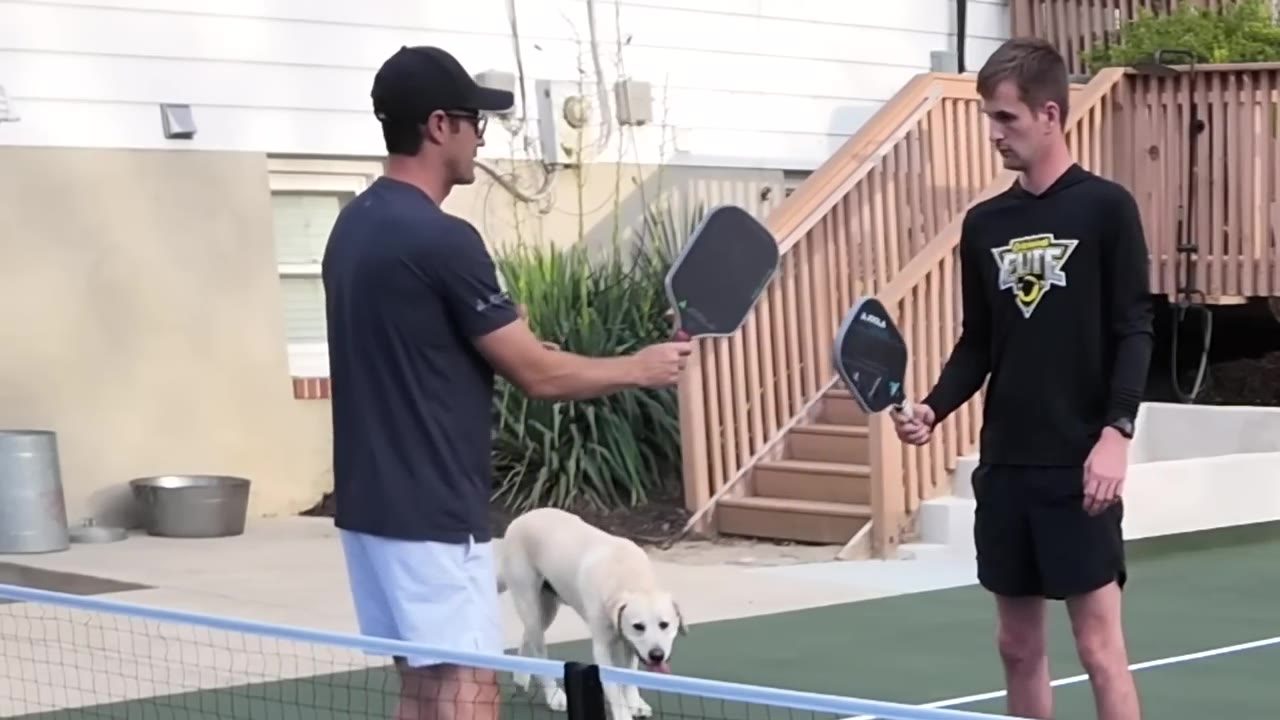
By the time it bounces I should already be here, as if the ball is just going to bounce and hit my paddle.— Josh
06 · Soft and high beats sharp and low
Buy yourself time
When you get pulled out wide, the answer isn't a perfect knifing dink that barely clears the net — that gives you no time to recover. Soft and high does. Hitting it a little higher actually buys time to get back into position. Caleb's reflex is to answer a good dink with a better dink; that's playing low margins. The coaches play high.
You're trying to hit a good dink and you're trying to hit a better dink — eventually you're just playing low margins. I'm playing high margins.— Josh
07 · The rule of three
Two dinks should sum to three
A framework Josh picked up teaching alongside Collin Johns: the sum of two dinks always equals three. An aggressive dink is a two; a soft, defensive dink is a one. So if your opponent hits a two, you can only look to hit a one back — you can't go two-plus-two. If they give you a soft one, that's when you take a two. There are 1.5s and everything in between; the point is to gauge whether the incoming ball causes distress or relief, and answer accordingly.
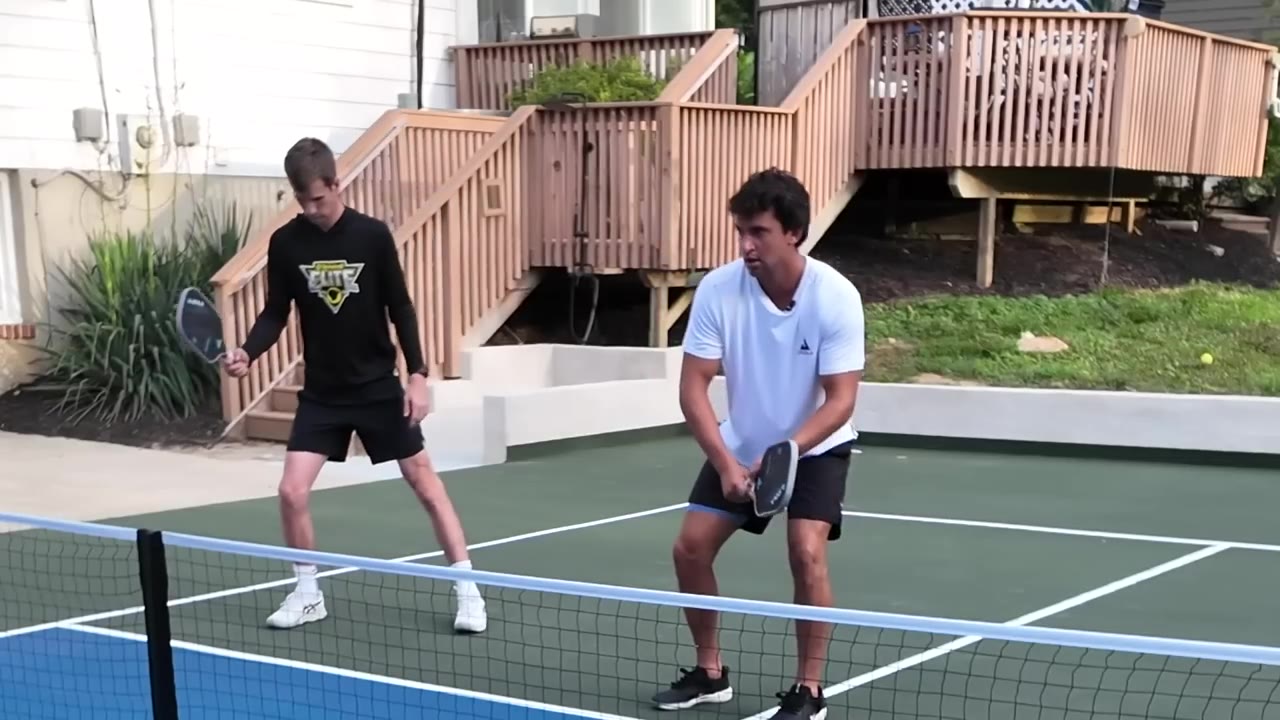
If I put something that causes you distress, put something that causes you relief.— Josh
08 · The half-volley
No time, so go straight at it
The longest stretch of the lesson, and the hardest cue for Caleb to feel. On a short hop there's no time to shape anything, so the move is to stick the paddle head down, keep the face open, and go straight at it — "motorcycle," not up-and-down. Caleb keeps the head neutral and the ball dies into the court; opening the face and getting under it early is what lifts it over the net. Time, Josh says, is your best friend and your enemy: when you have it, crank for topspin; when you don't, just stick it.
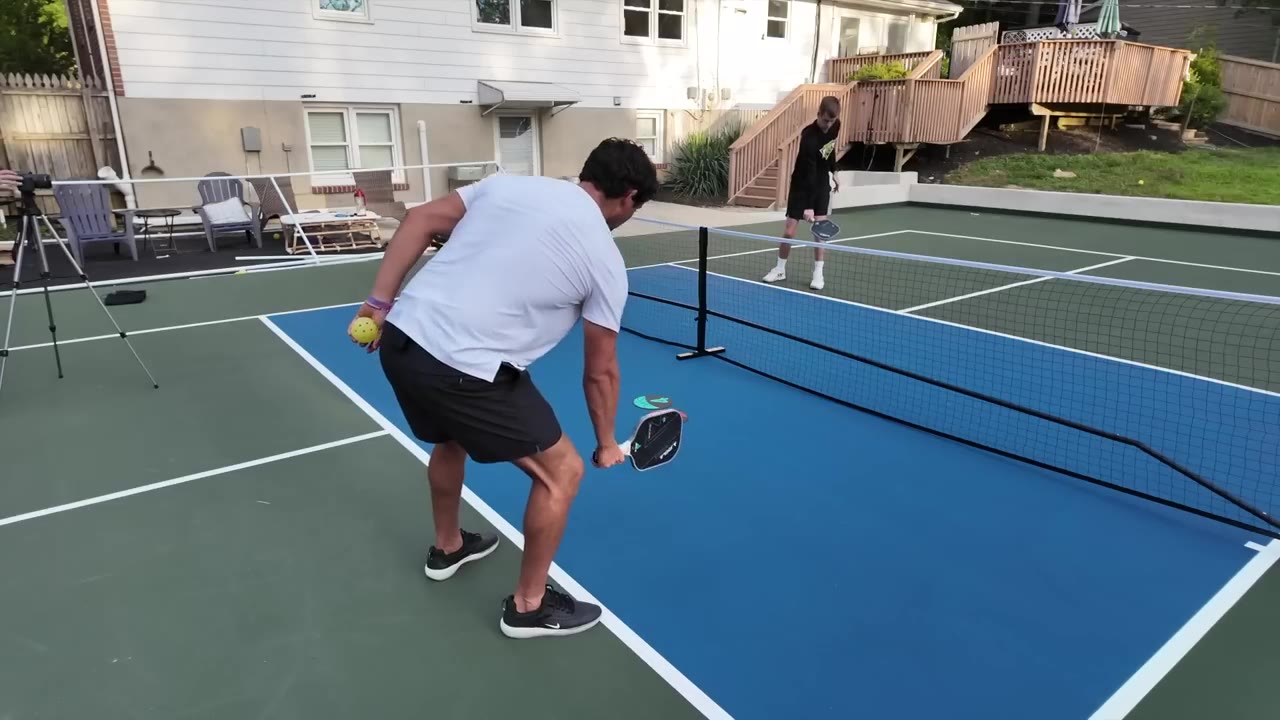
Time's your best friend and enemy. If I have time I can crank over and create topspin. If I don't, I don't.— Josh
09 · Ready position and less motion
Point your opposite corner
Two closers. First, ready position: laser-point your opposite-hand corner at the ball wherever it is. It strengthens the wrist for taking pace, preloads you toward the likely attack, and draws you closer to the ball. Second, the consistency fix — Caleb is "hooping and hopping," too many moving parts. The model is Ben Johns: tuck the shoulder, set everything, push the shoulder through. Fewer moving parts, more accuracy.
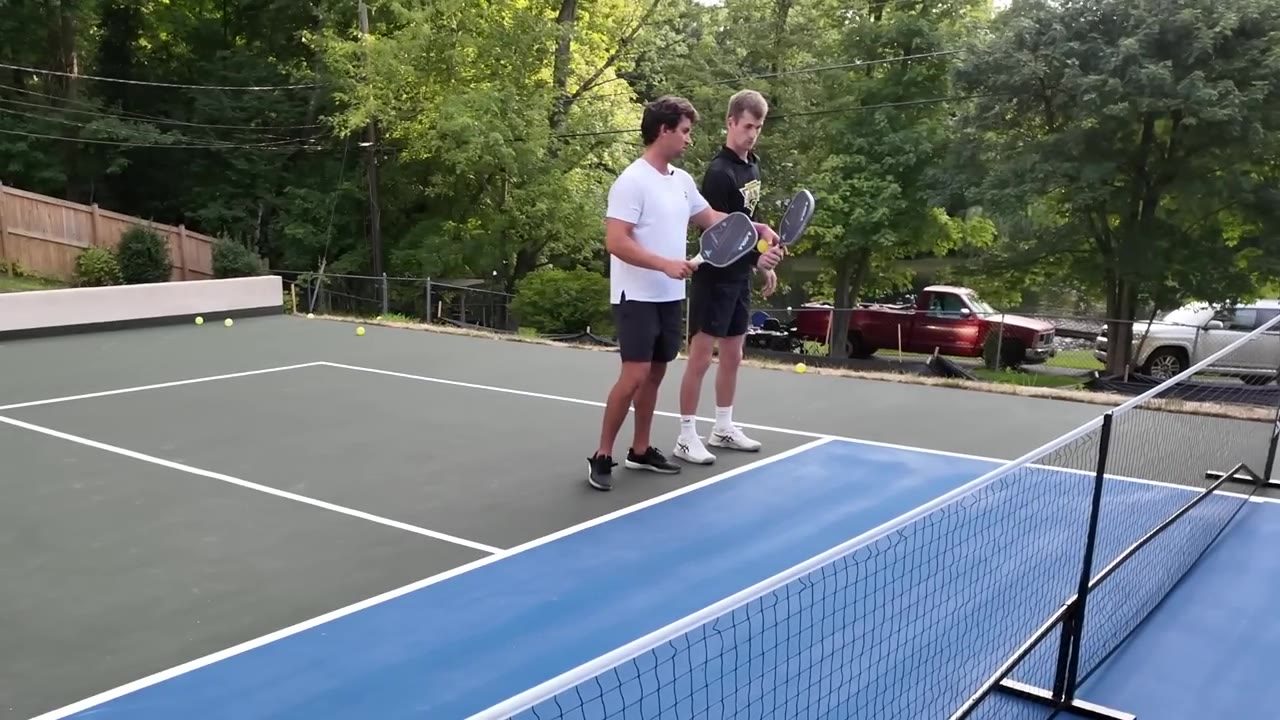
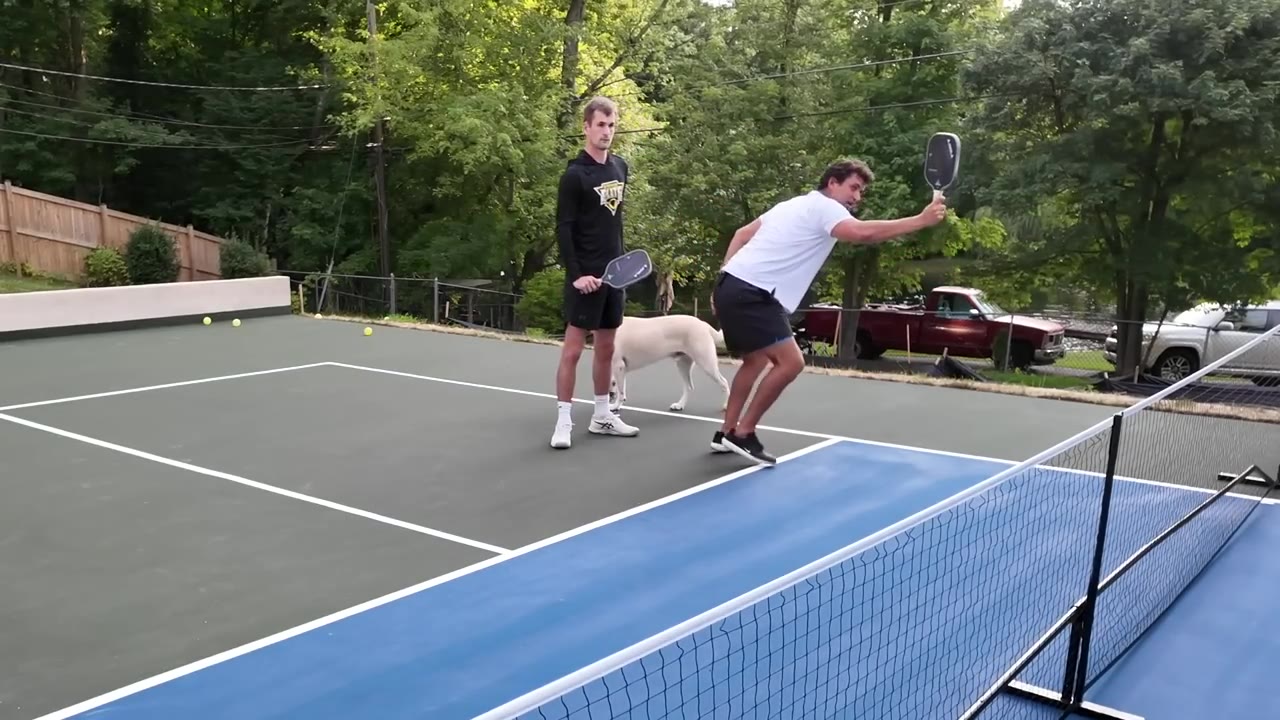
The more moving parts, the less accuracy, the less consistency. Less movement is typically better movement in pickleball.— Josh