The True Nature of Matter and Mass
Mass may not be a fundamental property at all. PBS Space Time works through why trapped massless particles resist acceleration, weigh something, and curve spacetime — and where that leaves the question of time.
Watch on YouTubeThe short version
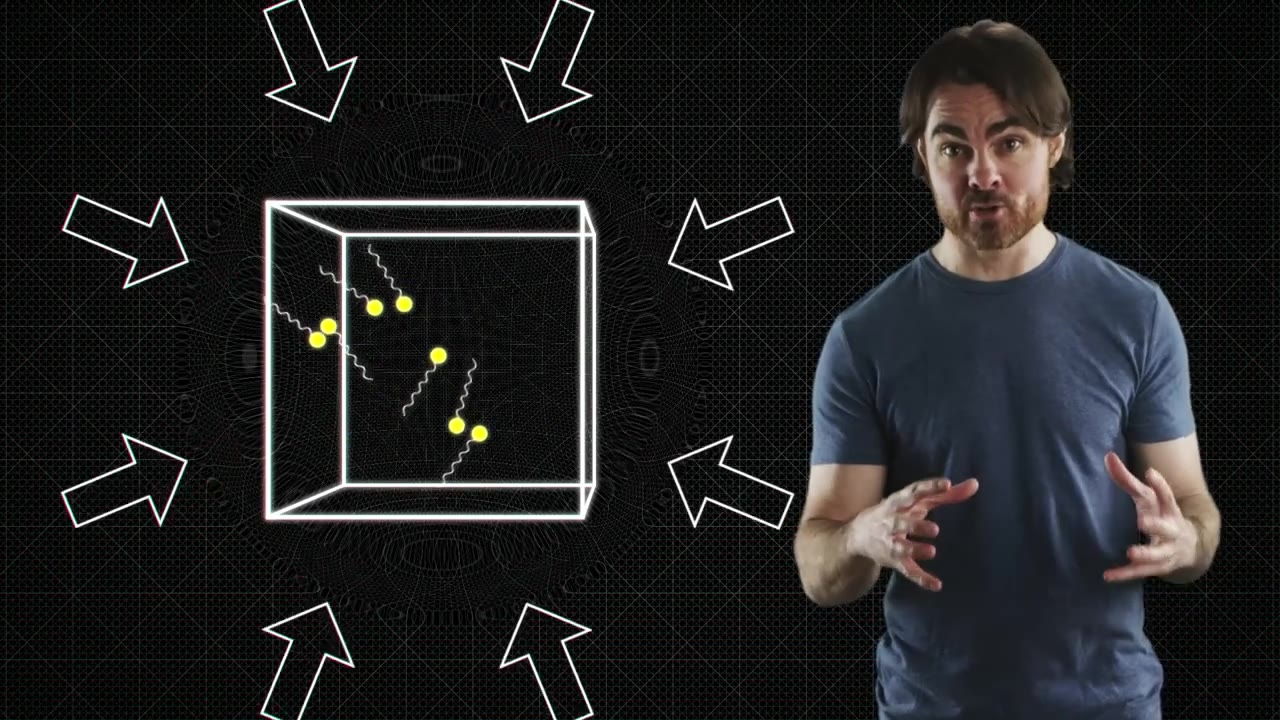
- Trap massless photons in a mirrored box and the box resists acceleration — it has mass, even though nothing inside it does. Mass is emergent.
- E=mc² isn't unique to photons: a compressed spring is heavier than a loose one for the same reason — energy is confined and interactions travel at the speed of light.
- About 99% of a proton's mass is quark oscillation energy plus the binding energy of the gluon field; the quarks' intrinsic Higgs mass is negligible.
- By Einstein's equivalence principle, inertial mass and gravitational mass are identical — trapped massless particles bend spacetime and generate real gravity.
- Open question for next episode: an individual photon's clock is frozen, so where does the box's experience of time come from?
01 · The photon box
Mass without massive parts
Take a box with mirrored walls, filled with massless photons bouncing in every direction. At rest the walls feel equal pressure, so no net force acts on the box. Push it, though, and the rear wall moves into the oncoming photons and feels slightly more pressure, while the front wall moves away and feels less. The resulting backward force resists the change in speed — and as long as the acceleration continues, that pressure gradient persists. It is indistinguishable from inertia because, the episode argues, it is inertia.
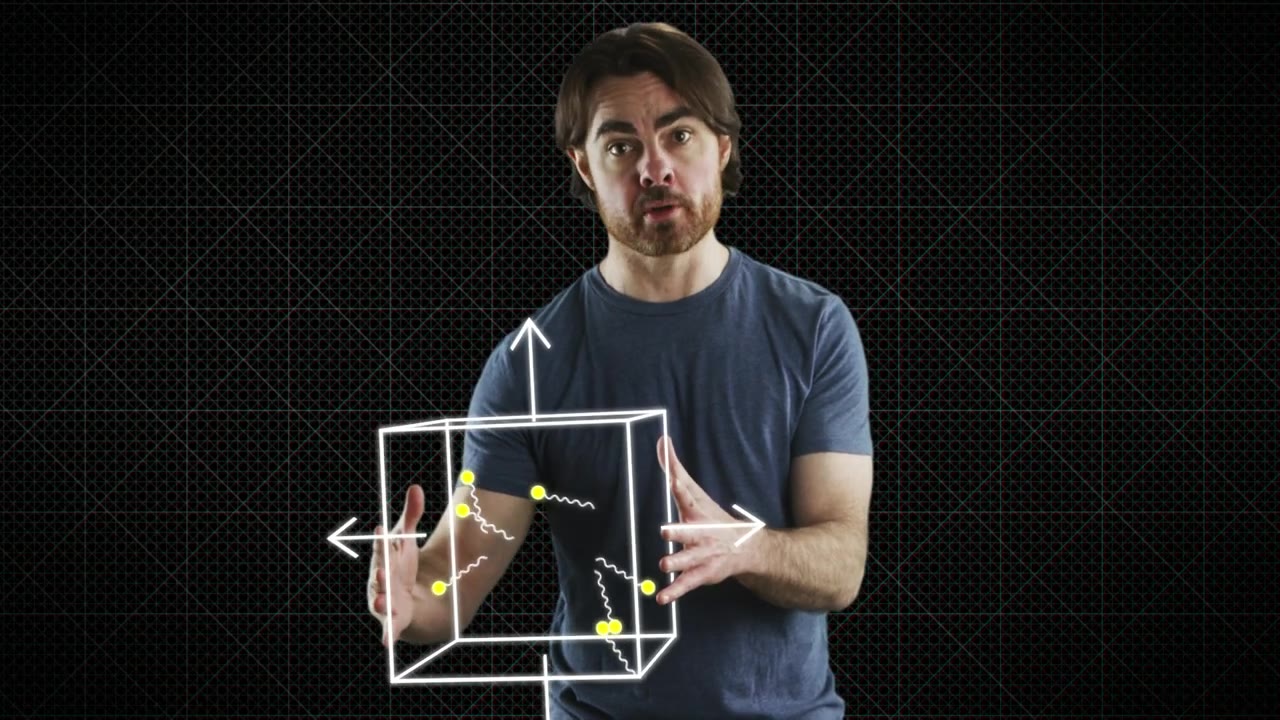
The photon box has mass, even though its components — neither the photons nor the walls — have mass.— PBS Space Time
02 · Trapped energy
Why a compressed spring is heavier
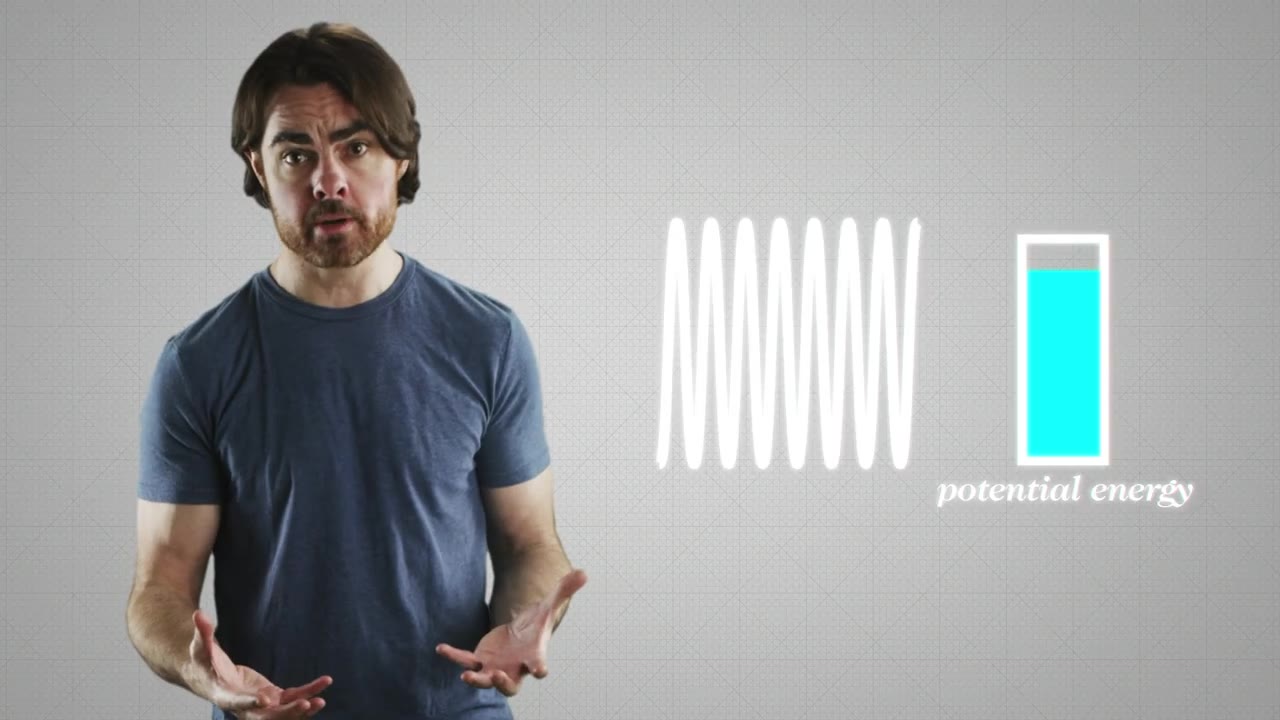
The box is not a special case. A compressed spring holds more energy than a loose one, and it is genuinely harder to set in motion: push it and the back end compresses first, then a wave carries the force through until the whole spring moves. The initial impulse has to be larger, so it behaves as if it has more mass — because it does. Same relationship, same E=mc². The underlying cause is shared with the photon box: the interactions doing the work — here the electromagnetic forces between atoms — travel at the speed of light, even though the density wave itself moves far slower.
03 · Inside the proton
Quarks bouncing in a gluon field
The same reasoning carries over to real matter. About 99% of a proton's mass is the oscillation energy of its quarks plus the binding energy of the gluon field; the quarks' own intrinsic mass — which they get from the Higgs field — contributes negligibly. So a proton behaves much like a photon box combined with a compressed spring: quarks bouncing inside a gluon binding field that acts like a loaded spring holding potential energy.
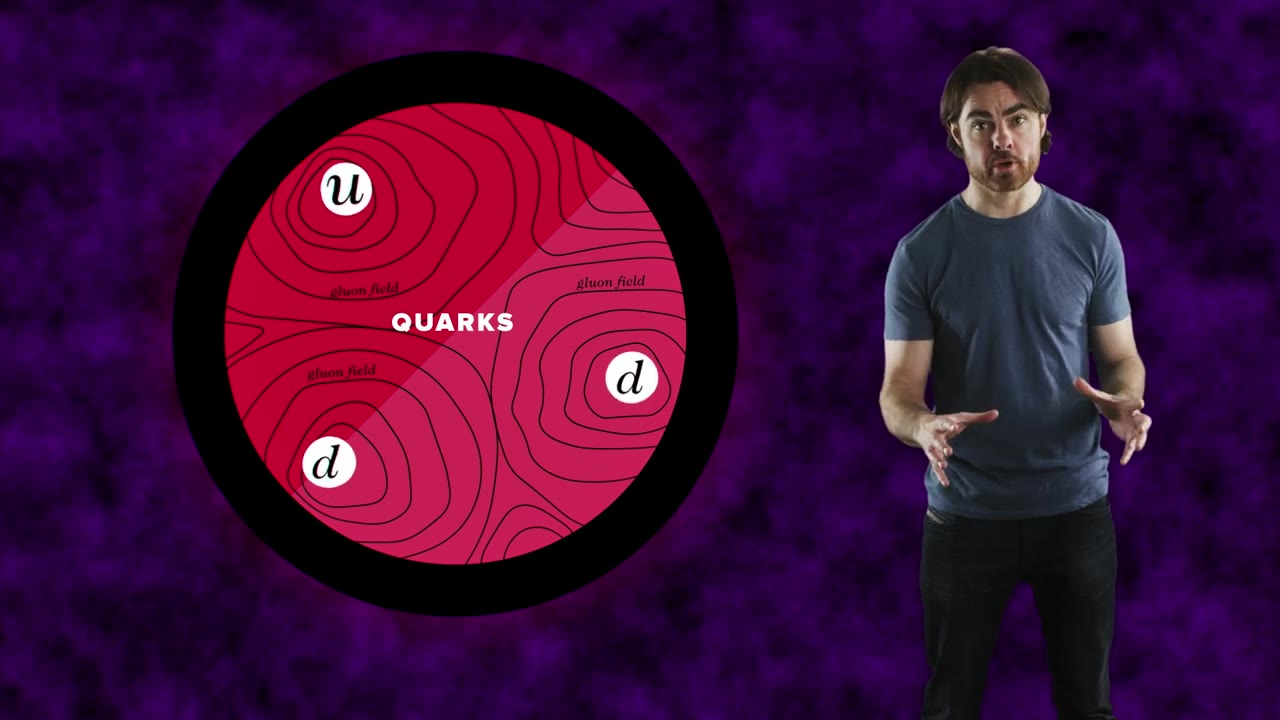
Quark oscillation
Kinetic energy of quarks confined in the proton
Gluon binding
Potential energy of the field that traps them
Higgs mass
Real but negligible for the proton's total
04 · Mass as emergent
Inertial mass is a property of the whole
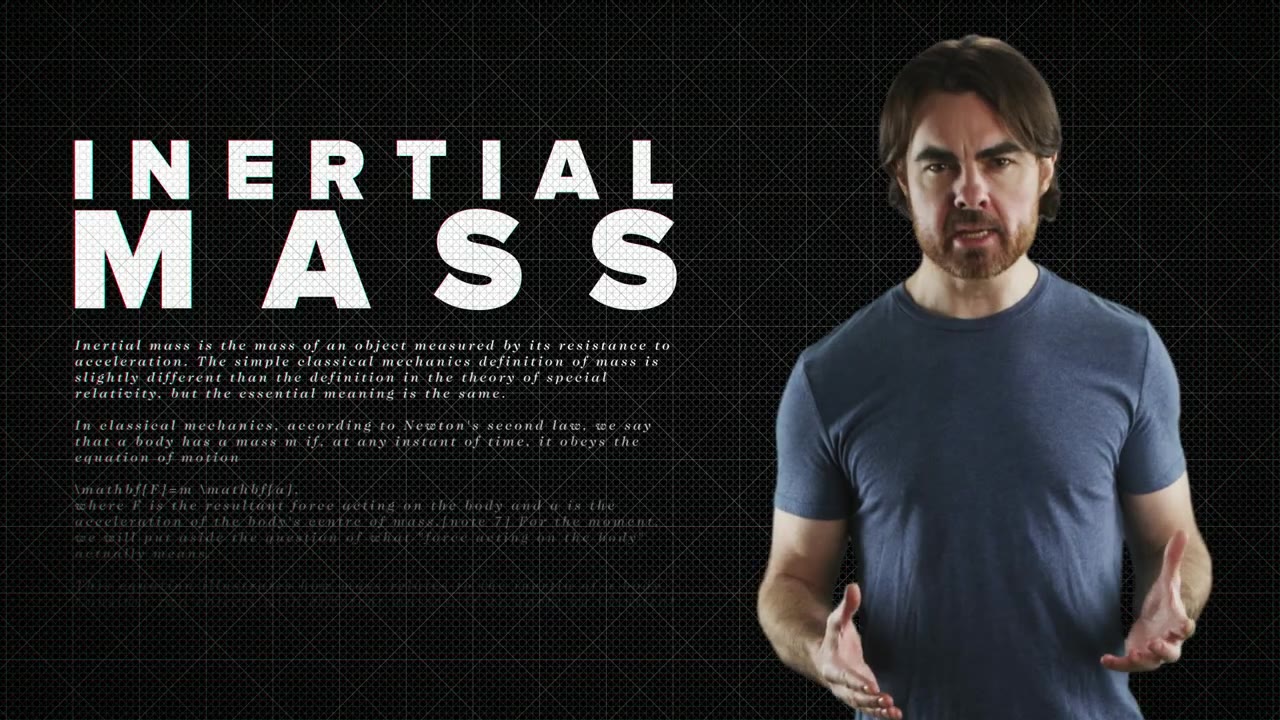
Remove the Higgs field and quarks and electrons would be massless particles moving at the speed of light. On this picture, anything with mass is a combination of intrinsically massless particles and the fields that confine them. Mass would then not be a fundamental property — it would be what shows up when those confined components resist acceleration. That resistance is inertial mass, and it belongs to the ensemble rather than to any of the parts.
05 · From inertia to weight
The equivalence principle
Emergent mass also weighs something. Einstein's equivalence principle holds that the sensation of acceleration in empty space is fundamentally the same as the sensation of gravity in a field — so holding the photon box aloft against 1g must be as hard as accelerating it at 1g in empty space. The equivalence principle tells us an object's inertial mass and gravitational mass are one and the same.
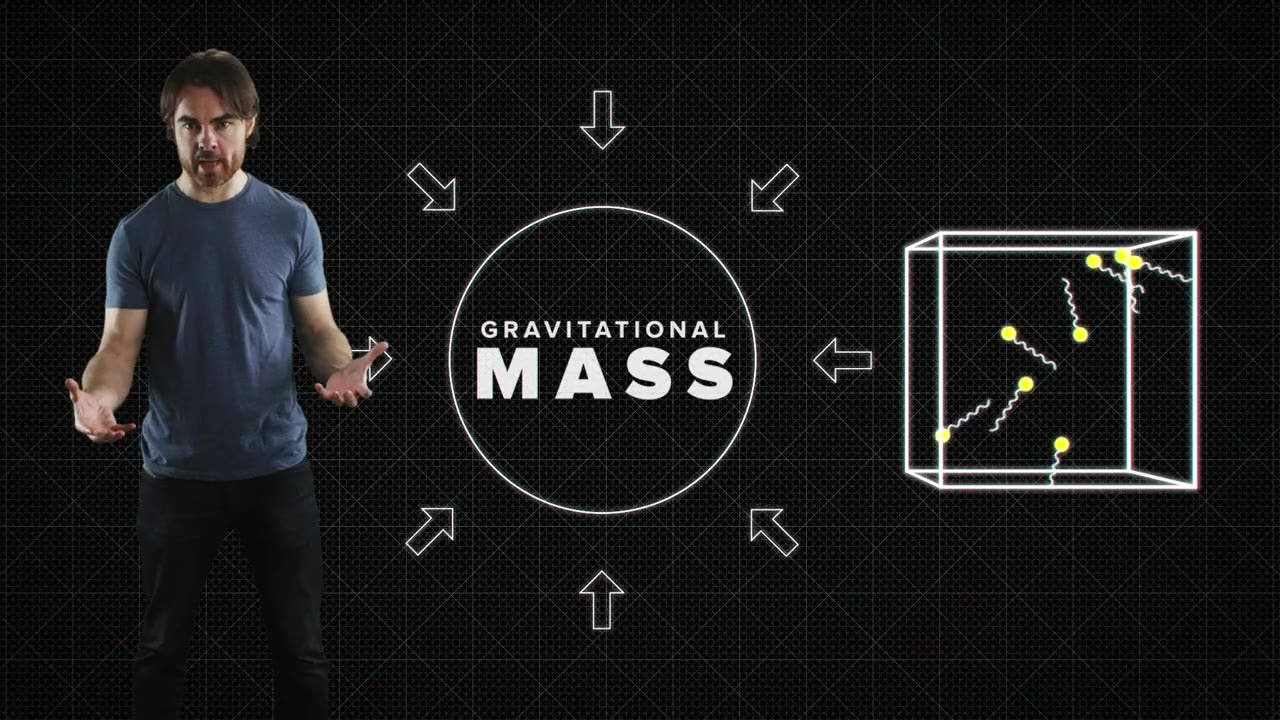
But mass doesn't simply respond to a gravitational field. She produces one herself.— PBS Space Time
06 · Trapped light, real gravity
And an open question about time
It is not only mass that curves spacetime. Energy flow, momentum, and pressure all contribute to the curvature too. An individual photon affects spacetime; trap many of them in a box and the curvature they produce looks exactly like gravity. So trapped massless particles generate a genuine gravitational field. That leaves a question the episode hands to the next installment: an individual photon does not experience the passage of time — its clock is frozen — yet the box has mass, so it must feel time. Where and when does that time emerge?